
Photo: cricketsblog via Wikimedia Commons, CC BY 2.0, cropped

To kill silverleaf nightshade, spray it with a picloram or dicamba plus 2,4-D herbicide in the spring, right when the plants begin to flower. For scattered plants, Texas A&M AgriLife recommends a 1% mix of Grazon P+D, Weedmaster or Range Star in water, sprayed until the leaves glisten, and reports 76% to 100% control. For big, solid stands, use a calibrated broadcast sprayer at 10 to 30 gallons per acre (Texas A&M AgriLife). Plan on more than one season. AgriLife says to expect about 7 of every 10 treated plants to die, then come back and treat new seedlings.
How to identify silverleaf nightshade
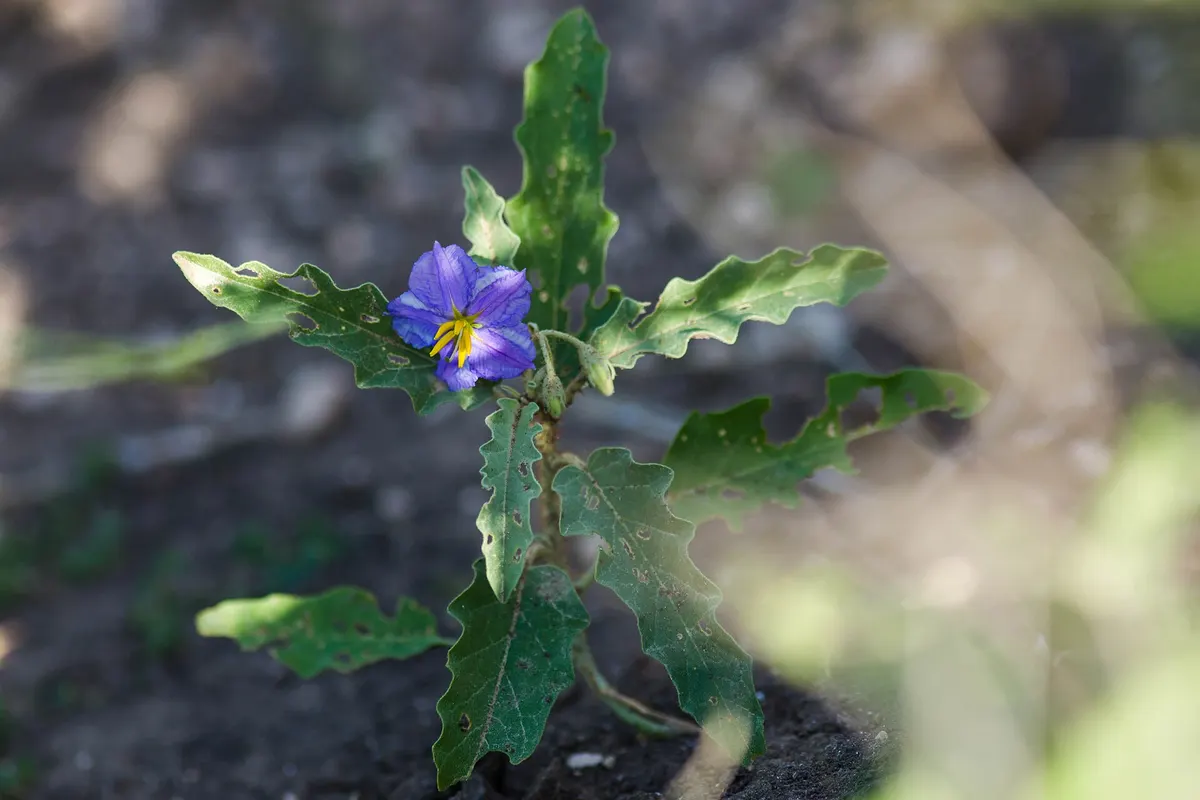
Silverleaf nightshade (Solanum elaeagnifolium), also called whiteweed or trompillo, is a perennial in the potato family. It grows upright, 1 to 3 feet tall, and is usually prickly. Tiny star-shaped hairs give the whole plant its silvery gray color. The leaves are lance-shaped with wavy edges, the flowers are violet or bluish and sometimes white, and the round yellow berries, up to half an inch across, show up from May to October (Texas A&M AgriLife).
It matters on ranch leases because it's poisonous. AgriLife reports it has poisoned cattle, sheep, goats and horses, that the leaves and fruit are toxic at every stage, that ripe fruit is the most toxic, and that an animal can be poisoned by eating as little as 0.1% to 0.3% of its body weight (Texas A&M AgriLife).
Why it keeps coming back
The part you see is the small part. The roots can grow 6 to 10 feet deep and run sideways to put up new shoots 6 feet from the parent plant. Root pieces as small as 0.4 inch can regrow, and sections of taproot can stay alive for up to 15 months. Each berry holds 24 to 149 seeds, which can add up to 5 million to 100 million seeds per acre, and dried plants can roll like tumbleweeds and drop seed as they go (Washington State Noxious Weed Control Board).
That's why mowing, disking or blading a patch usually makes it worse. The same report says cultivation won't readily kill it and that tillage is how the root pieces get spread around a field (Washington State Noxious Weed Control Board). On a lease, a maintainer blade or a box scraper on a pad edge does the same thing. Spray first, then do the dirt work after the roots are dead.
When to spray silverleaf nightshade
Timing is the biggest factor. AgriLife says to spray in the spring when the plants begin to flower, for both broadcast and spot treatments (Texas A&M AgriLife). Shoots usually come up from established roots as the soil warms in late March to early April, and flowering can start in early May (Washington State Noxious Weed Control Board). In West Texas that usually puts the best window in May and early summer, but go by the plants, not the calendar.
Skip a spray day when (from Texas A&M AgriLife):
- The plants are wet.
- Wind is over 10 mph.
- For spot spraying, the temperature is over 90°F or relative humidity is under 10%.
After a spot treatment, don't mow or disturb the plants for one growing season, so the herbicide has time to move down into the roots (Texas A&M AgriLife).
Spot spray mix for scattered plants
For a few plants, or if you don't have a boom, AgriLife's individual-plant method uses a pump-up, backpack or ATV sprayer with an adjustable cone nozzle (X6 to X8 orifice) or a flat fan nozzle set for a coarse spray. Fill the tank half full of water, add the herbicide and surfactant, then top it off. The mix is 1% Grazon P+D, Weedmaster or Range Star, and a marking dye helps you see what's done. Wet all the leaves until they glisten but don't drip, and keep the spray off forbs and shrubs you want to keep (Texas A&M AgriLife). In a 3-gallon sprayer, 1% is about 3.8 ounces of product, since 3 gallons is 384 ounces. To size a bigger tank, use our spray acreage and herbicide mix calculator.
AgriLife points out that spot spraying gets expensive fast as the number of plants per acre goes up. Once a patch is thick, broadcast is cheaper per plant (Texas A&M AgriLife).
Broadcast spraying large patches
For heavy infestations, AgriLife recommends a boom or boomless broadcast sprayer calibrated to put out 10 to 30 gallons of mix per acre, with at least 10 gallons per acre. Use Grazon P+D, Weedmaster or Range Star with a 90% active ingredient non-ionic surfactant, flat fan nozzles, and the boom at least 18 inches above the plants. Range Star carries its 2,4-D as an ester, which AgriLife calls slightly more effective than the amine form in Weedmaster. Mark your passes with flags or a foam marker so you don't leave skips (Texas A&M AgriLife).
AgriLife's 2026 rangeland herbicide table (ERM-1466) also rates aminopyralid plus 2,4-D (GrazonNext HL) as very high for silverleaf nightshade, alongside picloram plus 2,4-D, and caps the 3.8 lb/gal picloram:2,4-D product at 80 ounces per acre per year (AgriLife ERM-1466). Check the current label for the rate on your site, because the label is the law.
Products and licensing
| Product | Active ingredients | Note |
|---|---|---|
| Grazon P+D | Picloram plus 2,4-D | Restricted use pesticide |
| Weedmaster | Dicamba plus 2,4-D amine | Recommended by AgriLife |
| Range Star | Dicamba plus 2,4-D ester | Ester form, slightly more effective per AgriLife |
| GrazonNext HL | Aminopyralid plus 2,4-D | Rated very high in ERM-1466 |
Product details come from Texas A&M AgriLife and AgriLife ERM-1466. Grazon P+D is a restricted use pesticide, so it can only be bought and applied by a certified applicator or someone working under one (EPA Grazon P+D label). The label also warns that picloram can leach through soil into groundwater and that spraying around a cistern or water well can contaminate drinking water, so read its site and grazing restrictions before you spray near a water well, stock tank or yard (EPA Grazon P+D label).
Keeping it off pads and lease roads
On a working well pad, a grass-safe pasture spray isn't always the right tool. Where you want nothing growing, nightshade coming in from the pad edge is a job for a bare ground herbicide program, with spot sprays on the survivors. On roads and right-of-way, fold it into your lease and pad weed control plan along with goatheads and tumbleweeds. Whatever the site, check it every spring and hit new seedlings before they set roots, because AgriLife is clear that this isn't a one-time job (Texas A&M AgriLife).
Silverleaf nightshade or other deep-rooted weeds coming back on your pads, roads or pasture? Our Texas Department of Agriculture licensed applicators spray leases across the Permian Basin.
Get a weed control quoteFAQ
What is the best herbicide for silverleaf nightshade?
Texas A&M AgriLife recommends Grazon P+D (picloram plus 2,4-D), Weedmaster or Range Star (dicamba plus 2,4-D). Its 2026 herbicide table also rates GrazonNext HL (aminopyralid plus 2,4-D) as very high. Always follow the label.
When is the best time to spray silverleaf nightshade?
In the spring, when the plants begin to flower. Don't spray wet plants or when wind is over 10 mph.
What is the spot spray mix for silverleaf nightshade?
A 1% mix of Grazon P+D, Weedmaster or Range Star in water, with surfactant and a marking dye. Wet the leaves until they glisten. AgriLife reports 76% to 100% control.
Does mowing kill silverleaf nightshade?
No. Its roots can run 6 to 10 feet deep, and root pieces as small as 0.4 inch can regrow, so mowing and tillage tend to spread it. Spray first and don't disturb treated plants for one growing season.
Is silverleaf nightshade poisonous to livestock?
Yes. AgriLife reports it has poisoned cattle, sheep, goats and horses. Leaves and fruit are toxic at all stages, and ripe fruit is the most toxic.
Do I need a license to spray Grazon P+D?
Yes. Grazon P+D is a restricted use pesticide, so it must be bought and applied by a certified applicator or someone under one's supervision.