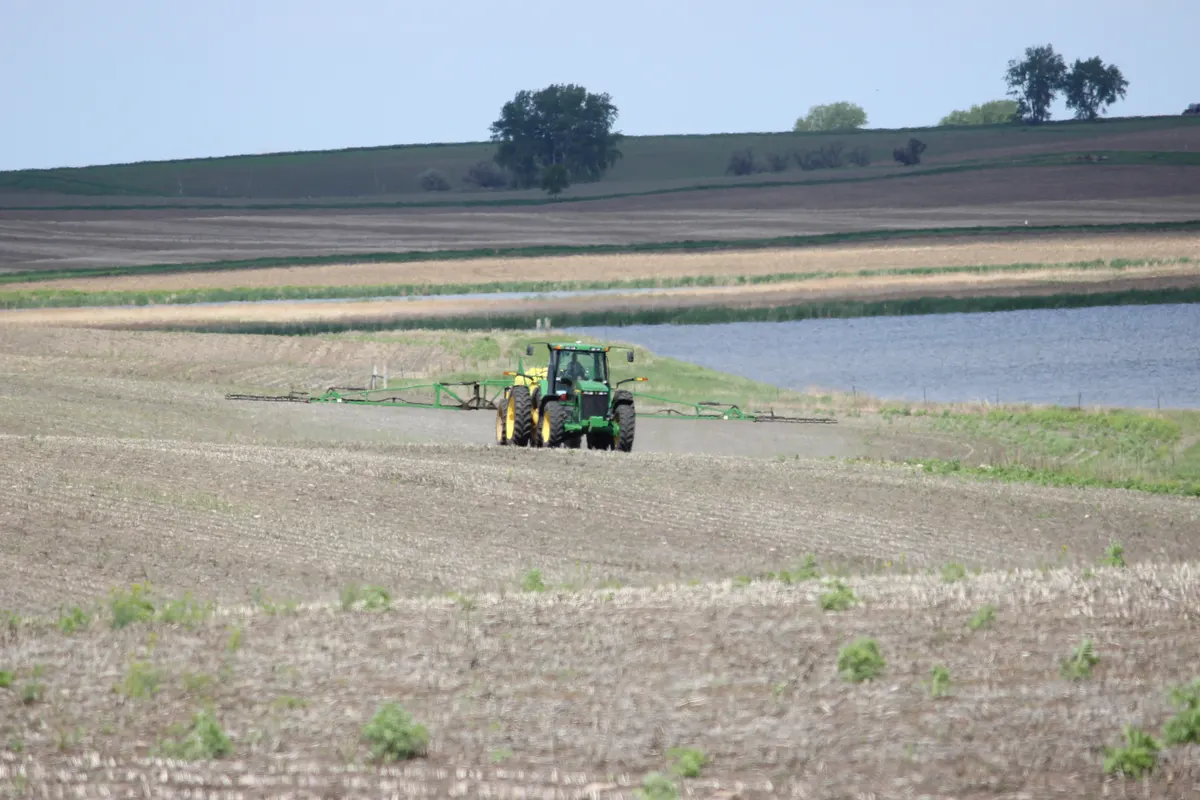
Photo: public domain, via Wikimedia Commons

Simba Services sprays and clears weeds on oilfield leases, well pads, tank batteries, roads and fence lines around Midland, Odessa and the Permian Basin. We hold a Texas Department of Agriculture commercial pesticide applicator license, so the work is done and recorded the way Texas requires.
Why operators keep pads clear
- Fire: dry grass and brush near tanks, separators and flare lines can carry a fire.
- Access and visibility: crews need to see lines, valves, signage and the ground they are walking on.
- Snakes and pests: overgrowth gives them cover around equipment.
- Inspections: a clean location is easier to inspect and maintain.
What grows on Permian leases
Most of what comes back on caliche pads, roads and fence lines out here is a short list:
- Kochia and Russian thistle: annual weeds that dry into tumbleweeds and pile up against fences, tanks and equipment. Kochia can sprout as early as March. Russian thistle usually comes up in May and June when it warms up. Both flower late summer into fall and spread seed as they roll (county weed handout).
- Mesquite and other brush: woody plants that creep in from lease edges and along roads and pipeline right-of-way.
- Grasses and other annual weeds that come up after rain on disturbed ground.
Some kochia in Texas has become resistant to common herbicides such as glyphosate, so a program that relies on one product can stop working (Texas A&M AgriLife). We pick and rotate products based on what is on the site and what the label allows.
Bare-ground vs. selective treatment
- Bare-ground (total vegetation control): keeps pads, tank batteries, compressor sites and equipment perimeters free of anything green. It usually pairs a residual (pre-emergent) product with a burndown for what is already growing.
- Selective or spot treatment: targets weeds or brush while leaving grass in place, for example on lease roads, right-of-way or ground the landowner wants kept in cover.
Many leases use both: bare ground on the pad, spot spraying around it. Landowner agreements sometimes limit what can be used where, so tell us about any restrictions up front.
When to spray
- Late fall to early spring: residual products go down before weeds germinate, which cuts down on what comes up later.
- Spring and early summer: treat new flushes while they are small. Kochia and thistle are much easier to kill young than after they harden off.
- After rains: follow-up visits catch what comes up after a wet spell.
Wind is the main limit on spray days in West Texas. We follow the label and hold off when drift is a risk.
What we do
- Bare-ground and pre-emergent treatments on pads and around equipment
- Spot spraying of weeds and brush on leases, roads and right-of-way
- Fence line and tank battery perimeter work
- Repeat visits on a schedule you set
We pick products for the site and apply them per the label. Texas requires licensed applicators to keep application records, and we can share ours with your field or HSE team.
How a job works
Tell us the leases or pads, what is growing and what is on location. We walk or drive the site, agree on the areas to treat, spray, and send you the record. Repeat visits can go on your schedule.
How quotes are priced
We quote each job after looking at the sites. The main things that set the price:
- Acreage or square footage to treat, and how many separate locations
- Bare-ground vs. selective work, and the products the site calls for
- How heavy the growth is, especially established brush
- Drive time between locations and how spread out they are
- One-time cleanup vs. a set number of visits per year
Send a list of leases or a map and we will come back with a quote.
Why the license matters
In Texas, anyone who applies pesticides, including herbicides, for hire needs a commercial applicator license from the Texas Department of Agriculture (TDA pesticide programs). Ask any contractor for their license number and check it with TDA before they spray your lease. After each visit, ask for the application record. It should show the date, the location treated, the product and its EPA registration number, how much was applied and who applied it.
Working around active locations
Pads are working sites, so plan spraying around the crews and equipment on them. Tell us who to check in with on location and any site rules, such as H2S monitoring or gate procedures. The product label sets the protective gear, how close we can spray to water such as stock tanks and draws, and how long people or livestock should stay off a treated area. If cattle graze the lease, tell us up front so we pick products whose labels allow it.
For what to check before hiring any contractor, see what to ask before hiring an oilfield service company.
Get a lease, pad or tank battery on the spraying schedule. We answer 24/7.
Get a weed control quoteFAQ
Do you need a license to spray weeds on an oil lease in Texas?
Yes, if you spray for hire. Texas requires a commercial pesticide applicator license from the Texas Department of Agriculture. Simba Services holds one.
What areas do you cover?
Leases, pads, tank batteries, roads and fence lines around Midland, Odessa and the Permian Basin.
Can you work on a schedule?
Yes. We can set repeat visits for the times of year you choose.
What does weed control on a well pad involve?
Treating the pad, equipment perimeter, tank battery and access road with labeled herbicides, then repeat visits as needed. We keep the application record.
When is the best time to spray weeds on a well pad?
Residual (pre-emergent) products work best put down from late fall to early spring, before weeds sprout. New growth is easiest to kill while it is small in spring and early summer, with follow-ups after rain.
What is the difference between bare-ground and selective weed control?
Bare-ground treatment keeps an area free of all vegetation, which suits pads, tank batteries and equipment. Selective or spot treatment targets weeds and brush and leaves grass in place.
How much does lease weed control cost?
It depends on acreage, number of locations, bare-ground vs. selective work, how heavy the growth is and how many visits per year. We quote each job after looking at the sites.