
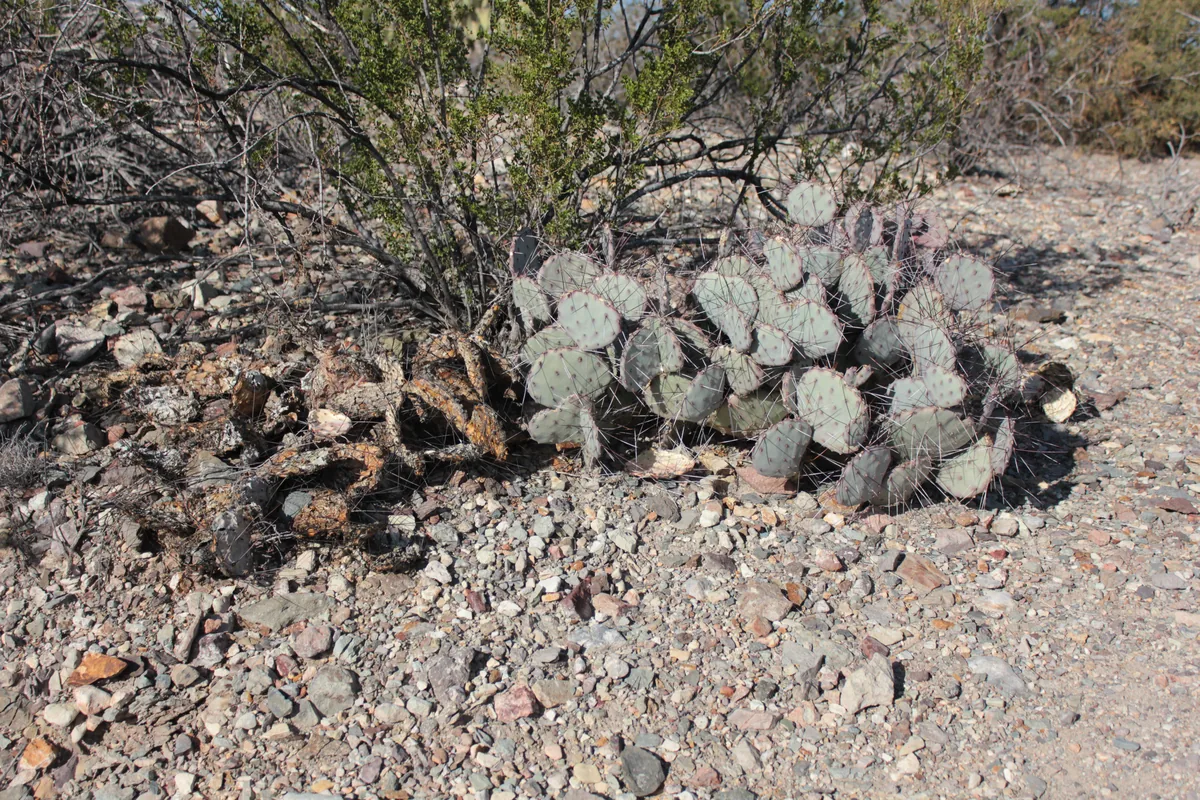
Photo: John Cummings via Wikimedia Commons, CC BY-SA 3.0, cropped

To kill prickly pear cactus in Texas, spray the pads and stems with a labeled herbicide mix, or cut the main root below the soil and haul the plants away. For scattered plants, Texas A&M AgriLife's Brush Busters program recommends a 1% pad or stem spray of MezaVue, Surmount/Trooper Pro, Tordon 22K (or another picloram 22K product), or PastureGard HL in water, with surfactant or MSO, until the pads are almost wet but not dripping. Done right, that method usually kills 76% to 100% of treated pads (Texas A&M AgriLife). Expect the plants to die slowly over two to three years, and plan to come back for seedlings.
Why prickly pear takes over leases
Prickly pear and related cacti tolerate drought and poor soil, so they thrive across the western half of Texas on pasture, ranch leases and the edges of well pads. Dense stands interfere with livestock movement, cut forage use and compete with grass (Texas A&M AgriLife). On oilfield ground they also snag boots, tires and hose, and they keep coming back after a blade pass because any pad that hits dirt can root.
AgriLife is clear that control is not a one-time job. Livestock and wildlife spread seed and scatter pads that root into new plants, so you have to walk the country and hit new seedlings as they show (Texas A&M AgriLife). Small amounts of prickly pear can help quail, deer and javelina; the problem is when it turns into a monoculture.
Brush Busters pad or stem spray (individual plants)
Use the individual-plant method on relatively thin stands. Dense patches may need a broadcast pass first (Texas A&M AgriLife). Backpack sprayers work well on small acreages or thick clumps; ATV or UTV sprayers cover more ground when plants are scattered. An adjustable cone nozzle (X6 to X8) suits smaller plants; a fan nozzle can be better on large pads.
AgriLife's current Brush Busters options for a 1% mix include:
- MezaVue (aminopyralid + picloram + fluroxypyr)
- Surmount / Trooper Pro (picloram + fluroxypyr)
- Tordon 22K / Triumph 22K / Picloram 22K (picloram)
- PastureGard HL (triclopyr + fluroxypyr)
Add the herbicide at a 1% rate in water. To coat the waxy pads, add a high-quality (80% to 90% active) non-ionic surfactant, or crop oil, methylated seed oil (MSO), or MSO-OS at the manufacturer's rate. A blue marking dye shows what you have hit (Texas A&M AgriLife). The older TexNat mixing table for Surmount lists about 4 oz of product and 1 oz of surfactant in a 3-gallon tank, 18 oz / 5 oz in 14 gallons, and 1 quart / 8 oz in 25 gallons, with dye at roughly 1/4% to 1/2% (Texas A&M Natural Resources Institute). To size a bigger tank, use our spray acreage and herbicide mix calculator.
Spray until every pad and stem is almost wet, but not to runoff. Results are faster and more consistent if you hit both sides of the pads (Texas A&M AgriLife). Skip the spray when pads are wet from rain or dew, when you are working upwind of trees or crops you want to keep, or when the stand is so dense that spot work will cost more than broadcast. Do not spray when the daily maximum air temperature has not exceeded 50°F for at least three consecutive days (Texas A&M AgriLife). Long dry spells after spraying can cut plant kill.
Broadcast rates from AgriLife ERM-1466
For heavy infestations, AgriLife's Chemical Weed and Brush Control suggestions (ERM-1466) list several broadcast options for pricklypear and tasajillo. Picloram alone is suggested at 16 to 32 ounces per acre (High control rating), with late summer through fall preferred. Picloram plus fluroxypyr (Surmount-type product) is listed at 64 ounces per acre (High). Picloram:2,4-D products and a 1% individual-plant spray of several mixes are rated Very High when applied correctly. Ground broadcast volumes in the table are typically 10 to 25 gallons per acre, with aerial volumes as low as about 4 gallons per acre when the mix and carrier match the label (AgriLife ERM-1466). Always check the current product label for the legal rate on your site; the label is the law.
ERM-1466 also lists prescribed burn plus picloram: burn December through March when fine fuel is continuous, then spray surviving pads within about five months (and no later than April 30 in most cases) at 8 to 16 ounces of picloram per acre, based on how hard the fire browned the pads (AgriLife ERM-1466). That option is not recommended for the Rio Grande Plains land resource area.
| Method | Typical AgriLife rate | Best use |
|---|---|---|
| Pad/stem IPT (1% mix) | 1% MezaVue, Surmount/Trooper Pro, picloram 22K, or PastureGard HL | Thin stands; selective control |
| Broadcast picloram | 16–32 oz/acre | Dense stands; late summer–fall preferred |
| Broadcast picloram:fluroxypyr | 64 oz/acre | Dense pricklypear/tasajillo |
| Top removal | Cut root 2–4 in. below soil; haul pads away | Small patches; no herbicide |
Rates and ratings above come from Brush Busters and ERM-1466.
Top removal without herbicide
Brush Busters also offers a mechanical option: cut the main root of prickly pear 2 to 4 inches below the soil with a grubbing hoe or shovel, then remove the detached plants or stack them on brush piles. Any pad that contacts the ground can root, so leaving cut pads on bare dirt often starts a new patch. Tasajillo and cholla are harder to grub because broken pieces reinfest the site (Texas A&M AgriLife).
Licensing, slow kill and pad edges
Surmount and picloram products are restricted-use pesticides in Texas. TexNat notes that buying and using Surmount requires a Texas Department of Agriculture pesticide applicator license (Texas A&M Natural Resources Institute). Follow label setbacks near sinkholes, fractures, wells and endangered-plant habitat. Prickly pear dies very slowly after a pad spray; total kill may take two or three years, so mark treated clumps and check them later (Texas A&M Natural Resources Institute).
On a working well pad where you want bare ground, fold cactus into a bare-ground herbicide program and spot-spray survivors. On pasture and lease roads, treat it with other brush such as mesquite and silverleaf nightshade under your lease and pad weed control plan. Cost rises fast as plants get bigger and denser, which is why Brush Busters pushes early follow-up on seedlings.
Prickly pear crowding a lease road, pad edge or pasture? Our Texas Department of Agriculture licensed applicators spray brush and weeds across the Permian Basin.
Get a weed control quoteFAQ
What is the best way to kill prickly pear?
For scattered plants, Texas A&M AgriLife Brush Busters recommends a 1% pad or stem spray of MezaVue, Surmount/Trooper Pro, Tordon 22K (or equivalent picloram 22K), or PastureGard HL, with surfactant or MSO, until pads are almost wet but not dripping. Correct applications usually kill 76% to 100% of treated pads.
When should you spray prickly pear?
Brush Busters says you can spray anytime with adequate soil moisture except in extremely cold weather. Do not spray wet pads, and skip days when the daily high has not exceeded 50°F for at least three days. AgriLife's ERM-1466 table notes best broadcast results from late summer through fall.
What is the 1% prickly pear spray mix?
Add the selected herbicide at 1% of the spray solution in water. For a 3-gallon tank that is about 4 ounces of product. Add a high-quality non-ionic surfactant (or crop oil/MSO at the label rate) and a marking dye so you can see coverage.
Does cutting or blading kill prickly pear?
Top removal can work if you cut the main root 2 to 4 inches below the soil and haul the plants away. Any pad that touches the ground can root into a new plant, so stacking or leaving cut pads on dirt often spreads the stand.
How long does it take for sprayed prickly pear to die?
Prickly pear dies slowly after a pad or stem spray. AgriLife says total plant kill may take two to three years. Plan follow-up visits for seedlings and survivors.
Do I need a license to spray Surmount or Tordon on prickly pear?
Yes for restricted-use products such as Surmount and picloram 22K products. Texas A&M notes that purchase and use of Surmount requires a Texas Department of Agriculture pesticide applicator license. Always follow the current label.