Photo: Spielvogel via Wikimedia Commons, CC0 1.0, cropped

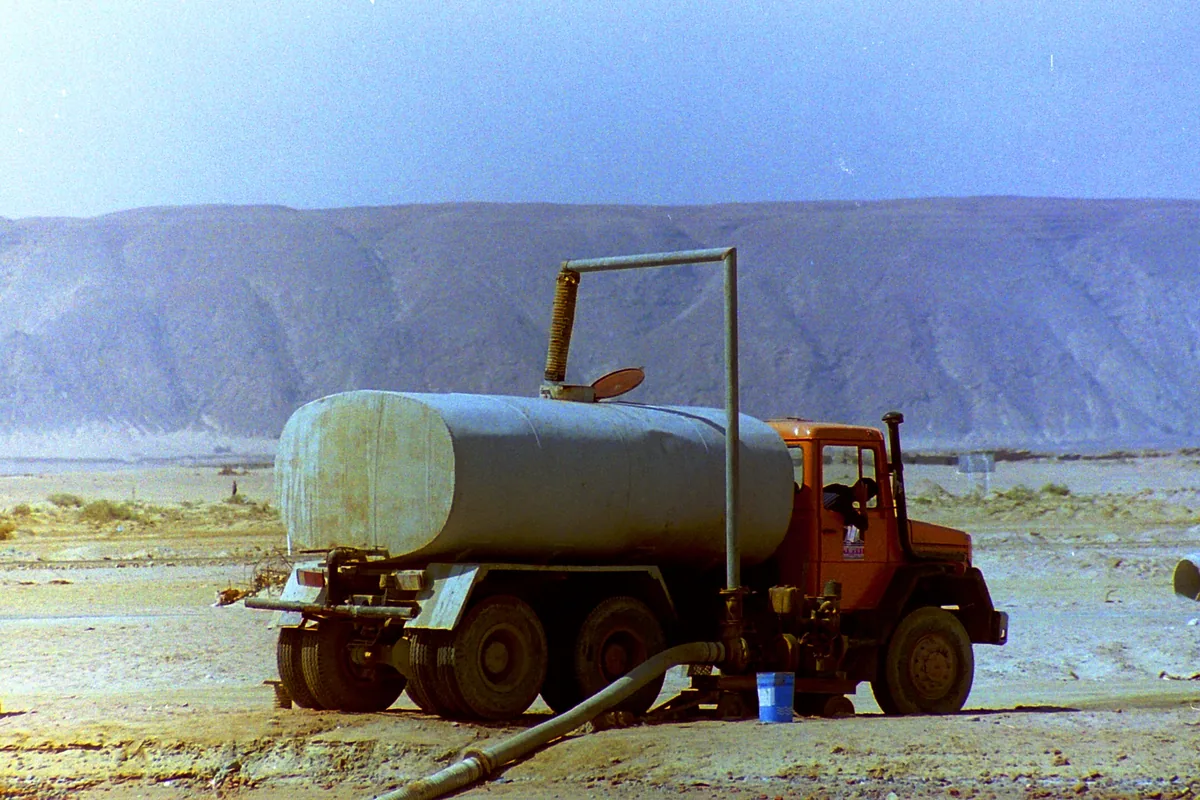
A kill truck in the oilfield is a high-pressure pump truck that pushes fluid into a well to control pressure, circulate fluid, support a workover, or pressure-test equipment. A vacuum truck does the opposite kind of fluid work: it uses a tank and vacuum pump to suck liquids up and haul them off. In the Permian, crews often say "vac and kill" in one breath because many service companies run both, and some trucks can do limited work of each kind, but the jobs are not the same.
Kill truck vs. vacuum truck
Think push versus pull:
| Kill / pump truck | Vacuum truck | |
|---|---|---|
| Main job | Pump fluid into a well, annulus or test line | Suck liquids into a tank and haul them |
| Typical work | Well kill, circulation, pressure tests, jet-out | Produced water, tank bottoms, cellars, spills |
| Key hardware | High-pressure pump, iron, fluid tank | Vacuum pump, sealed tank, hose |
| Direction of fluid | Out of the truck into the well or line | Into the truck from the location |
Industry dispatch pages describe it the same way: a vac truck hauls drilling mud, saltwater and produced water with suction; a kill truck is the high-pressure unit used for well control, kill operations and pressure testing. When someone on the lease says they need a "kill," they usually mean pump support, not a suck truck. When they need water pulled from a battery or a spill, they mean vac. Mixing those up wastes a trip.
What "kill" means on a well
In well-control language, to kill a well is to circulate a fluid dense enough (or otherwise designed) to stop formation fluids from flowing into the wellbore. The fluid is often called kill fluid or kill-weight fluid. The truck does not invent that program. The operator or well-control plan names the fluid, weight and volume; the kill truck shows up with a pump rated for the pressure and the volume the ticket needs, connects iron, and pumps.
On everyday Permian workovers the call is often less dramatic than a full well-control event. Company men still order a kill or pump truck to:
- Fill and circulate the hole before pulling tubing
- Kill a well ahead of a plug or abandonment job
- Pressure-test BOPs, lubricators, lines or new pipe
- Jet out or circulate sand and debris
- Move fluid between tanks and the well when gravity and a vac pump are not enough
Pressure ratings vary by unit. Regional fleets commonly advertise pump trucks in ranges such as 5,000 to 10,000 psi working pressure, but the only number that matters on your location is the rating on the truck that shows up and the iron you connect. Confirm that with dispatch before the truck leaves the yard.
Pump truck, pressure truck, kill unit
Names blur. The same class of equipment gets called a kill truck, pump truck, pressure truck or kill unit. Manufacturers of oilfield pressure units describe a standard setup as a truck-, trailer- or skid-mounted package with a high-pressure pump, a charge or load pump and a product tank, used for well killing, pressure testing, hydro-testing, annulus work and chemical or freeze-protect pumps. On Midland-Odessa leases you will hear "kill truck" most often when the ticket is well work, and "pump truck" when the ticket is a test or a fluid move. Ask for the pump pressure rating and volume either way.
How a typical kill or pump call runs
- Scope: well name, what fluid, roughly how much, target pressure, H2S status and whether the job is kill, circulate, test or transfer.
- Match the truck: dispatcher sends a unit with enough pump pressure and tank volume, plus iron and crew.
- On location: spot the truck per the company man, connect, pressure-test the iron if required, then pump to the program.
- Close-out: break down, leave connections as found, and confirm volumes pumped.
Vac work on the same pad is a different ticket. Produced water hauling, tank cleaning and cellar pulls follow waste-hauler and disposal rules covered in our produced water and vac truck hauling guide. Static electricity on vac loads needs bonding and grounding; that is covered in vacuum truck safety: grounding and bonding.
Fluid handling safety (high level)
Kill and vac jobs share some hazards even when the equipment differs. Produced water, tank bottoms and workover fluids can release H2S and other gases (OSHA H2S fact sheet). Open tanks, cellars and flow lines are gas traps. Pump jobs add pressure on treating iron, swivels and hoses; a parted connection under pressure is a strike and splash hazard. OSHA's general duty and well-control expectations sit on top of the operator's JSA and permit-to-work rules for that location.
Practical basics before you start pumping or sucking:
- Know the H2S status of the site and wear the monitor the operator requires. See what level of H2S is dangerous for ppm context, and follow the operator's gas program under OSHA's hazard communication and respiratory rules (29 CFR 1910.134).
- Gauge tanks and check for vapor before opening hatches.
- Stay out of the line of fire on pressurized iron.
- Keep spill kits and containment ready when transferring fluids.
- Follow confined-space and fall rules for tank work; do not improvise entry.
Those points are ordinary oilfield practice, not a substitute for the operator's written procedures or a well-control plan.
When you need which truck
Call a kill / pump truck when fluid has to go into the well or a test line under pressure. Call a vac truck when fluid has to come off the location into a tank for haul or disposal. Call both when a workover needs the hole killed and tanks or cellars cleaned in the same window. If you are not sure which unit fits, tell dispatch the well name, fluid type, volume, pressure and whether the fluid is going in or coming out; they will match the truck.
Need a kill, pump or vac truck in the Midland-Odessa area? Tell us the location, fluid, volume and timing.
Get a vac or kill truck quoteFAQ
What is a kill truck in the oilfield?
A kill truck is a high-pressure pump truck that pushes fluid into a well to control pressure, circulate fluid, support a workover, or pressure-test equipment. The fluid pumped is often called kill fluid or kill-weight fluid when the goal is to stop or control flow from the well.
What is the difference between a kill truck and a vacuum truck?
A vacuum truck uses suction to pull liquids into its tank and haul them away. A kill truck uses a pump to push fluid into a well or test line. Some oilfield units can do limited work of both kinds, which is why the names are often spoken together, but the jobs are different.
When do operators call a kill truck?
Common calls include killing a well ahead of a workover or plug, circulating fluid, pressure testing BOPs or lines, jetting out, and other pump support on location. The exact scope comes from the operator or company man for that well.
What is kill fluid?
Kill fluid is the fluid pumped into the wellbore to control formation pressure. Depending on the well, it may be weighted brine, water-based fluid, or another fluid the operator specifies. The truck delivers and pumps what the job ticket calls for; the operator owns the fluid program.
Are kill truck and pump truck the same thing?
In Permian Basin talk they usually overlap. Crews often say kill truck, pump truck or pressure truck for a truck-mounted high-pressure pump used for well control support, circulation and pressure tests. Always confirm pressure rating and volume with the dispatcher for the job.
What safety issues come with kill and vac fluid work?
Produced water and tank fluids can carry H2S and other gases. Pump work adds pressure hazards on iron and hoses. Crews should know the H2S status of the location, follow the operator's permits, and treat open tanks and connections as sources of gas and splash. See our vacuum truck grounding guide for static hazards on vac loads.