
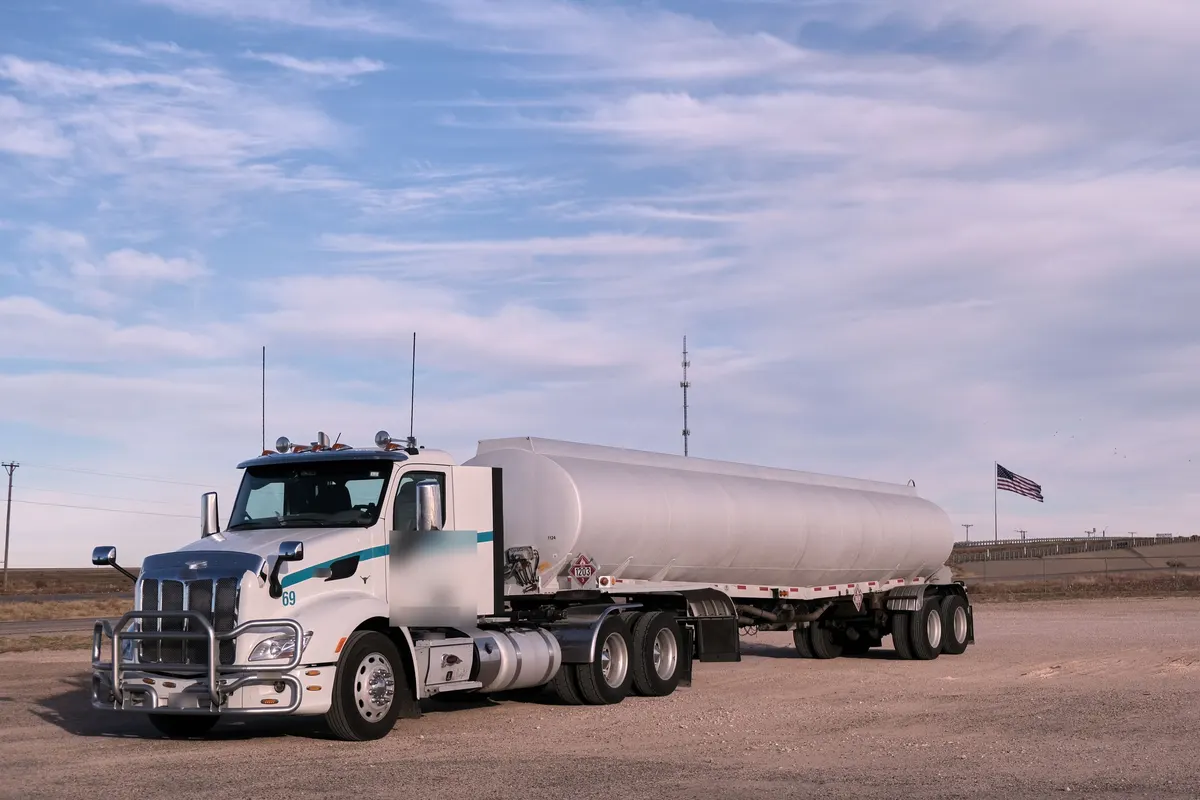
Photo: Alexander via Pexels
The main fire hazards on a vacuum truck are flammable vapor and the ignition sources around it: the truck's own running diesel engine, static electricity and smoking. To work safely, bond the whole transfer system and ground the truck before any fluid moves. Park on level ground at least 25 feet from the tank (50 feet inside a diked area), upwind or crosswind if you can. Test the air whenever there's any doubt. Shut the engine down and clear the cab if vapors reach 25% of the lower explosive limit (LEL). Those practices come from API Publication 2219, the industry guide OSHA points vacuum truck operators to (OSHA Safety and Health Information Bulletin 03-24-2008).
Why oilfield fluids catch vac trucks off guard
Produced water, tank bottoms and basic sediment and water (BS&W) look like dirty water. They can still carry light hydrocarbons that give off flammable vapor. When the U.S. Chemical Safety Board tested nine BS&W samples from six production wells, eight had flashpoints below 30°F. For comparison, condensate's flashpoint is about -36°F, and OSHA treats any liquid with a flashpoint under 100°F as flammable. The CSB also found that most industry people it interviewed didn't think BS&W was a fire hazard at all (OSHA Safety and Health Information Bulletin 03-24-2008; U.S. Chemical Safety Board).
That gap is why the paperwork matters. OSHA says producers should identify the hazard of the fluid and provide a safety data sheet to haulers and disposal facilities, so the driver knows what is in the tank (OSHA Safety and Health Information Bulletin 03-24-2008).
The Rosharon fire: what went wrong
On January 13, 2003, two vacuum trucks were offloading BS&W into an open pit at an oilfield waste disposal facility near Rosharon, Texas. The fluid was contaminated with condensate. The drivers had left their engines running and walked to a shed to do paperwork. Vapor from the fluid was drawn into the diesel air intakes, the engines began to race and backfire, and the vapor cloud ignited. Three people died, and four more were badly burned. The trucks had grounding cables but weren't grounded during the offload. Investigators found the diesel engines were the most likely ignition source (OSHA Safety and Health Information Bulletin 03-24-2008; U.S. Chemical Safety Board).
One lesson from the bulletin surprises a lot of drivers. When a diesel engine is running on vapor drawn in through its intake, turning the key off won't stop it as long as vapor keeps coming in. OSHA says emergency procedures need to cover engine overspeed caused by flammable vapor (OSHA Safety and Health Information Bulletin 03-24-2008).
Bonding vs. grounding
| Bonding | Grounding | |
|---|---|---|
| What it connects | The truck, hose, nozzle and source or receiving tank to each other | The truck to the earth, or to something solidly grounded such as a grounded tank or buried piping |
| What it prevents | A spark between parts at different charge when a hose or nozzle is pulled or disconnected | Static charge building up on the truck at all |
| When to connect | Before transfer starts; keep it connected until the hose is out and disconnected | Before transfer starts |
OSHA's bulletin, quoting API 2219, says the complete vacuum transfer system should be bonded to give a continuous conductive path from the truck through the hose and nozzle to the tank. It also says trucks need to be grounded before transfer starts, so any static charge bleeds off to earth (OSHA Safety and Health Information Bulletin 03-24-2008). The CSB report notes that very little spark energy is needed to ignite hydrocarbon vapor, which is why a static discharge you can barely see or feel is enough (U.S. Chemical Safety Board). Mine safety regulators have issued their own warning about static ignitions during vacuum truck work (MSHA).
Setup checklist before you open a valve
- Know the fluid. Get the safety data sheet or a clear description from the operator, and don't mix incompatible loads in a tank that hasn't been cleaned (OSHA).
- Park right. Level ground, at least 25 feet from the tank or 50 feet inside a diked area, preferably upwind or crosswind (OSHA).
- Bond and ground. Connect both before fluid moves.
- Test the air. A qualified person with a calibrated combustible gas meter and toxic gas tester checks the area before starting and during the job whenever there's doubt (OSHA). In the Permian, include hydrogen sulfide. See our bump test and calibration guide.
- No smoking within at least 100 feet of the truck, the vacuum pump discharge or any other vapor source (OSHA).
- Stay with the job. Stand within 25 feet of the truck, between it and the tank, upwind and to the side, ready to close the valve and stop the pump if a hose fails or a line plugs (OSHA).
- Know the trigger to shut down. At 25% of LEL or higher, shut the engine off and get everyone out of the cab (OSHA).
Offloading at disposal
The Rosharon fire happened at the end of the haul, not at the lease. OSHA's recommendations cover the disposal site too. That means written offloading procedures meant to keep vapor down and prevent static sparks, training for everyone who handles the fluid, and emergency plans. Drivers shouldn't leave a running truck to wait out an offload (OSHA Safety and Health Information Bulletin 03-24-2008). For the permits and manifests that go with hauling produced water in Texas, see our produced water hauling guide. For spill work, see saltwater spill cleanup.
Training that covers it
OSHA expects vacuum truck owners to make sure operators are trained and qualified, and it lists hazard communication, flammable liquids, HAZWOPER emergency response and classified locations among the standards that apply (OSHA Safety and Health Information Bulletin 03-24-2008). On a sour lease, add H2S training on top of that, because the same vapor that can burn can also be toxic.
If the ticket is pumping fluid into a well rather than sucking it off location, that is a kill or pump truck job, not a vac load. See what is a kill truck.
Need produced water, tank bottoms or a spill pulled by a crew that bonds, grounds and monitors every load? We run vac trucks across the Permian Basin.
Get a vac truck quoteFAQ
Do vacuum trucks need to be grounded?
Yes. OSHA's bulletin, based on API Publication 2219, says vacuum trucks should be grounded before transfer starts, and the whole transfer system bonded, so static can't spark in flammable vapor.
What is the difference between bonding and grounding a vac truck?
Bonding connects the truck, hose, nozzle and tank so they hold the same charge. Grounding connects the truck to earth so static drains away. You need both.
How far should a vacuum truck park from a tank?
API 2219, as quoted by OSHA, says at least 25 feet from the source or receiving tank, or 50 feet in a diked area, and preferably upwind or crosswind.
Why can a diesel engine start a vapor fire?
A running diesel engine can pull flammable vapor in through its air intake, then race and backfire. That's what OSHA found most likely ignited the 2003 Rosharon, Texas fire. Turning off the key won't stop an engine that's running on vapor.
Is produced water or BS&W flammable?
It can be. The Chemical Safety Board tested nine BS&W samples and found flashpoints below 30°F in eight of them, well inside OSHA's flammable range.
When should vac truck crews shut the engine off?
Whenever flammable vapor at or above 25% of the lower explosive limit is present during loading or offloading. Everyone should leave the cab, too.