
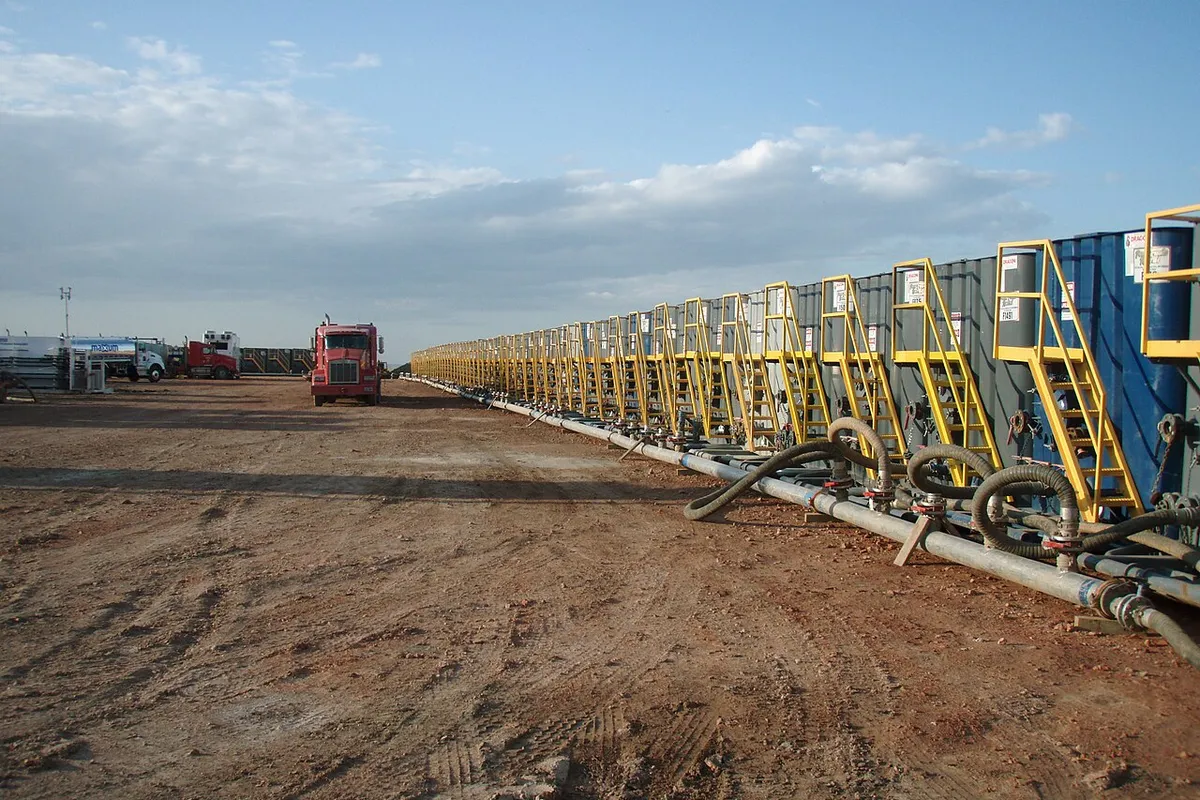
Photo: Joshua Doubek, CC BY-SA 3.0, via Wikimedia Commons

Produced water is one of the biggest waste streams from oil and gas production, and the part that does not move by pipeline goes by vac truck. In Texas the Railroad Commission (RRC) regulates how it is hauled. Anyone who hauls it off the lease for hire needs an RRC waste hauler permit. Since July 1, 2025, each off-lease load also needs a manifest tied to a waste profile under the RRC's rewritten waste rules in 16 TAC Chapter 4. This guide covers who needs a permit, what the trucks and paperwork must show, where the water can go, and the federal driver rules that apply to oilfield hauling. It is a plain-language summary, not legal advice; the rule text controls.
What counts as oil and gas waste
The RRC lists produced water and spent drilling muds and cuttings as examples of the RCRA-exempt waste that makes up most of the volume from exploration and production (RRC Waste Haulers). Tank bottoms, oily soil and similar wastes from a lease fall under the same rules. Some loads are left out of the waste hauler rule: inert waste such as sand, concrete and demolition debris, asbestos, PCB waste, hazardous oil and gas waste under Rule 98, and NORM above the state exemption levels. Those follow their own rules (16 TAC §4.193).
Who needs a waste hauler permit
A person who transports oil and gas waste for hire, by any method other than pipeline, off the lease or property where it was generated must hold a valid waste hauler permit (WHP). The RRC says this applies even when the water is hauled for use in drilling or servicing another well, if it leaves the lease. The permit:
- Is issued for no more than one year and must be renewed annually.
- Costs $250 for an initial or renewal application.
- Requires an active P-5 Organization Report, and the name on the permit must match the P-5.
- Is applied for online in the RRC's LoneSTAR system, through a RAMP account.
The application includes a list of vehicles, an affidavit from the operator of each disposal facility the hauler plans to use saying the hauler has permission, and a certification that the trucks are built so they will not leak. A renewal can be filed no earlier than 60 days before the permit expires. File more than six months after expiration and you need a new permit number (§4.193; RRC WHP FAQ).
What the trucks must show
- The permit holder's name and permit number on both sides and the rear, in characters at least 3 inches high. That covers vacuum trucks, tank trailers, dump trucks and any other container hauling the waste.
- A copy of the permit and the RRC's list of approved vehicles, carried in each truck. Only listed vehicles are covered.
- Trucks operated and maintained so nothing spills or leaks, and available for RRC inspection on request.
A waste hauler may not gather oil or carry oil in the same truck as the waste, other than the skim oil normally present in produced water.
Paperwork for every load
Chapter 4 put three paperwork rules in place on July 1, 2025.
Waste profile (§4.190). Before the waste moves, the generator, usually the operator, characterizes it on a Waste Profile Form. The profile lists the generator name and P-5 number, a waste identifier, a description of the waste and its characteristics, and the basis for the characterization. Operators can set up standard profiles for common wastes. The profile goes to the hauler and the receiving facility.
Manifest (§4.191). Each load moved by vehicle to an off-lease facility needs a paper manifest or an electronic one the RRC can access. It must show:
- The generator's name, operator number and contact information
- Where the waste came from: lease name and number, facility number or latitude and longitude, and county
- The waste profile identifier
- The receiving facility and its permit identifier
- The hauler's name and waste hauler permit number, with the driver's signature
- Type and volume of waste, and the shipping date
- The generator's signature, and the receiver's signature and acceptance date
Records (§4.194). The generator, hauler and receiver each keep profiles and manifests for at least 3 years. A commercial facility that turns away a load that is not correctly characterized or manifested must notify the RRC right away, and a receiver who finds a significant discrepancy in a manifest sends a letter to the RRC, the generator and the hauler. Waste moved by pipeline does not need a manifest, but the pipeline operator must meter it.
Where it can go
A WHP lets the hauler use RRC-permitted waste facilities that are permitted for the type of waste being hauled, including facilities under a minor permit. Produced water commonly goes to a saltwater disposal well permitted under Rule 9 (16 TAC §3.9), or to a permitted recycling facility. Non-hazardous waste can also go to a facility permitted by another agency or another state, if the load carries a manifest and a copy goes to the RRC district office within 30 days. Starting December 31, 2026, transfers between RRC and TCEQ jurisdiction also have to be reported to the RRC (§4.192).
Driver and truck rules
A vac truck is also a commercial motor vehicle, and federal rules add their own requirements:
- CDL. A vehicle with a gross vehicle weight rating of 26,001 pounds or more needs a commercial driver's license (49 CFR 383.5).
- 24-hour restart. Drivers of trucks used for oilfield work can end any 8-day period with 24 hours off duty (49 CFR 395.1(d)(1)). FMCSA guidance says this covers trucks hauling water and supplies to a well site and waste away from it (FMCSA, 2012).
- Waiting time. The rule that lets waiting time at a well site count as off duty is narrower. It applies only to vehicles specially built for well-site use whose operators need extensive training on the equipment, such as wireline trucks, cement pumps and frac pumps. A truck that only hauls water or supplies would not normally meet both tests.
- Fire extinguisher. Each power unit carries one rated 5 B:C or two rated 4 B:C (49 CFR 393.95).
Trucks that stay inside Texas may fall under Texas intrastate rules, which can differ. Check with Texas DPS for your fleet.
If a load spills
A leak or spill from a truck on a lease or road is reported to the RRC district office under Rule 20. See Texas RRC spill cleanup rules for notice and cleanup.
Questions to ask a vac truck company
- What is your waste hauler permit number, and is it on the truck?
- Which disposal and recycling facilities are you approved to use?
- Do you use paper or electronic manifests, and will I get a copy of each?
- Are your drivers CDL holders, and who do I call at 2 AM?
How we help
Simba Services runs vac and kill trucks for produced water hauling, liquid waste removal, tank cleaning and pipeline construction support around Midland, Odessa and the Permian Basin, 24/7.
Need produced water or fluids hauled? Send the location, volume and timing.
Request a vac truckFAQ
Do you need a permit to haul produced water in Texas?
Yes, if you haul it off the lease for hire by any method other than pipeline. You need a Railroad Commission oil and gas waste hauler permit, renewed every year.
How much is an RRC waste hauler permit?
$250 for an initial or renewal application, filed online in LoneSTAR. You need an active P-5 Organization Report first.
How must waste hauler trucks be marked?
With the permit holder name and permit number on both sides and the rear, in characters at least 3 inches high, and each truck carries a copy of the permit and approved vehicle list.
Does every load of produced water need a manifest?
Yes, for loads moved by vehicle to an off-lease facility since July 1, 2025. The generator, hauler and receiver keep manifests for 3 years. Pipelines are exempt but must meter.
Can vac truck drivers use the oilfield 24-hour restart?
Drivers of trucks used for oilfield work, including hauling water to and waste from well sites, can end an 8-day period with 24 hours off duty under 49 CFR 395.1(d)(1).