
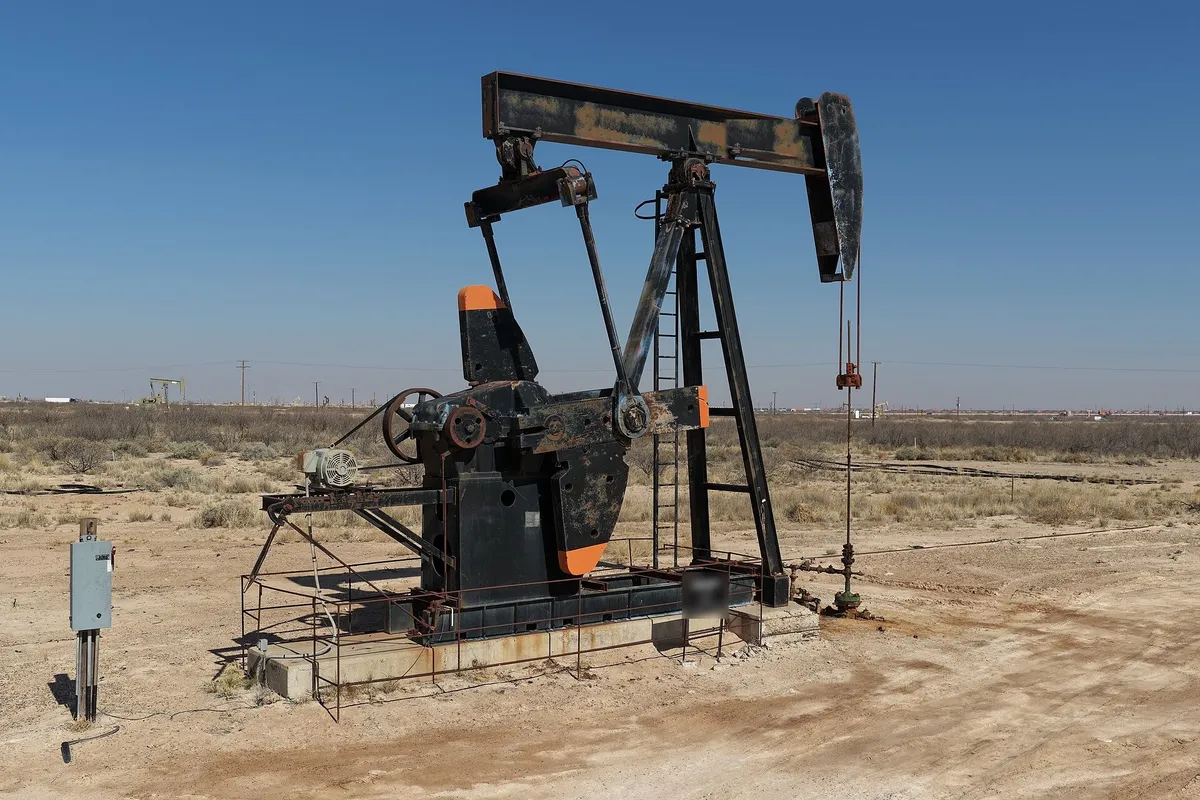
Photo: Quintin Soloviev via Wikimedia Commons, CC BY 4.0, cropped, markings removed

Since July 1, 2025, Texas oilfield pits are governed by the Railroad Commission's new rules in 16 TAC Chapter 4, Subchapter A, which replaced the old Statewide Rule 8 (RRC announcement). The short version: reserve pits, mud circulation pits, completion and workover pits and a few other types are still authorized without a permit, but every authorized pit now has to be registered, some need liners, and each type has a set deadline to dewater, backfill and compact after the work ends. Basic sediment pits, flare pits and other unpermitted pits had until July 1, 2026 to get a permit or be closed. Here's how the rules break down for operators and the crews who close pits.
Which pits are authorized without a permit
Section 4.113 authorizes these pit types without a permit, as long as they meet the rules: reserve pits, mud circulation pits, completion and workover pits, makeup water pits, fresh mining water pits, water condensate pits and produced water recycling pits. They must be outside the 100-year flood plain unless the District Director approves otherwise (16 TAC Chapter 4). Section 4.103 separately bars storing oil or oil products in a pit, and any pit that isn't authorized needs a permit (16 TAC Chapter 4).
The rules also spell out what can go in each pit. Reserve and mud circulation pits can take drilling fluids, cuttings, wash water, drill stem test fluids and blowout preventer test fluids. Completion and workover pits also take fluids and solids cleaned out of a well being plugged. Makeup water pits can't hold produced water (§4.114, 16 TAC Chapter 4).
Registration: the big change from Rule 8
Under Chapter 4, all authorized pits must be registered with the Commission. A new pit has to be registered before it's used. A pit that already existed on July 1, 2025 had one year to be registered or closed, and the Commission's online registration system is due by July 1, 2027 (16 TAC Chapter 4). A registration includes the pit type, its location by lease or permit, latitude and longitude (NAD 83), dimensions and capacity in barrels, depth to groundwater and, for produced water recycling pits, financial security (16 TAC Chapter 4).
Other dates in the rule (16 TAC Chapter 4):
- January 1, 2026: noncommercial fluid recycling pits had to register as produced water recycling pits with financial security, or close.
- July 1, 2026: basic sediment pits, flare pits and other unpermitted pits had to be permitted or closed.
- Within 24 hours: a release from an authorized pit has to be reported to the District Office.
When a pit needs a liner
A reserve, mud circulation, completion or workover pit needs a liner if the fluid has more than 3,000 mg/l total dissolved solids, or if groundwater is within 50 feet of the bottom of the pit. The liner can be natural or synthetic, but it has to meet a hydraulic conductivity of 1.0 x 10⁻⁷ cm/sec or less (§4.114, 16 TAC Chapter 4). That makes depth to groundwater one of the first things to pin down before a pit is dug.
Pit closure deadlines
Closure means dewatering, backfilling and compacting the pit. Section 4.114 sets the clock by pit type and chloride level (16 TAC Chapter 4):
| Pit | Dewater | Backfill and compact |
|---|---|---|
| Reserve, mud circulation or makeup water pit, chlorides 6,100 mg/l or less | Within 1 year after drilling stops | |
| Same pits, chlorides over 6,100 mg/l | Within 30 days | Within 1 year |
| Completion or workover pit | Within 30 days | Within 120 days |
| Fresh mining water or water condensate pit | Within 120 days | |
A pit split into sections is closed section by section. The District Director can require faster closure. The duty to close the pit also stays with the operator even after a lease expires or is transferred (16 TAC Chapter 4).
Produced water recycling pits
Produced water recycling pits get the strictest rules (§4.115, 16 TAC Chapter 4). Financial security is $1.00 per barrel of capacity for an operator with five or fewer pits. Above five, it's the greater of $1.00 per barrel for 10% of total capacity or $1,000,000, or $200,000 per pit, capped at $5,000,000. Siting setbacks are at least 300 feet from surface water, 500 feet from a public water well or intake, 300 feet from a domestic or irrigation well and 500 feet from a public area, and the pit can't be in a floodplain. The pit has to be fully lined, keep 2 feet of freeboard plus room for a 25-year, 24-hour rain, and have slopes no steeper than 3 to 1. A natural liner is only allowed for a pit with a life under a year, and it must be 2 feet of compacted fat clay placed in 6-inch lifts at 95% standard proctor.
Landfarming and burying drill solids
Section 4.111 allows some on-lease disposal instead of hauling. Low-chloride (3,000 mg/l or less) water-based mud can be landfarmed on the same lease with the surface owner's written permission, on ground with no more than a 3% slope, 500 feet from a public water well and 300 feet from surface water and other wells, where groundwater is deeper than 100 feet. Limits include a pH of 6 to 9, a layer no thicker than 6 inches and total petroleum hydrocarbons of 1% or less. Dewatered solids can also be buried in the reserve or completion pit at the same well site. Records have to be kept for 3 years (16 TAC Chapter 4).
Where pits fit with spills and site restoration
Pit rules sit next to two others crews deal with on the same lease. A crude oil spill falls under Rule 91; see our Rule 91 spill cleanup guide. Final site cleanup after a well is plugged falls under Rule 14; see plugged well site restoration. For hauling the fluids pulled out of a pit, see produced water hauling rules.
Need a pit dewatered, backfilled and compacted before the deadline? We bring vac trucks and dirt crews to close pits across the Permian Basin.
Get a pit closure quoteFAQ
Did Texas replace Rule 8?
Yes. The Railroad Commission replaced Statewide Rule 8 with 16 TAC Chapter 4, Subchapter A, effective July 1, 2025.
Do reserve pits need a permit in Texas?
No, reserve pits are authorized without a permit under §4.113 if they follow the rules, but they must be registered with the Commission and kept out of the 100-year flood plain unless the District Director approves.
How long do you have to close a reserve pit in Texas?
If chlorides are 6,100 mg/l or less, dewater, backfill and compact within 1 year after drilling stops. Above 6,100 mg/l, dewater within 30 days and backfill within 1 year.
When does a drilling pit need a liner in Texas?
When the fluid has more than 3,000 mg/l total dissolved solids or groundwater is within 50 feet of the pit bottom. The liner must meet 1.0 x 10^-7 cm/sec conductivity or less.
How fast do completion pits have to be closed?
Dewater within 30 days and backfill and compact within 120 days after completion or workover.
What happened to basic sediment and flare pits?
Under Chapter 4 they had to be permitted or closed by July 1, 2026.