
Photo: Dr Photographer via Pexels
To kill salt cedar (saltcedar or tamarisk), you have to kill the root crown, not just the top. Texas A&M AgriLife's Brush Busters program recommends two methods for individual plants. On thickets and bushy, many-stemmed plants, use a leaf spray of ½% imazapyr (Arsenal) plus ½% glyphosate in water from July through September, before the leaves turn yellow. On scattered, tree-type plants with a few large trunks, use a stem spray of 25% triclopyr (Remedy) in diesel, which can go on at any time of year (Texas A&M AgriLife Brush Busters). Cutting, mowing, grazing or burning alone won't kill it, because the plant resprouts from a root crown that sits 12 to 18 inches underground (USDA Forest Service field guide). Plan on follow-up treatments.
How to tell it is salt cedar
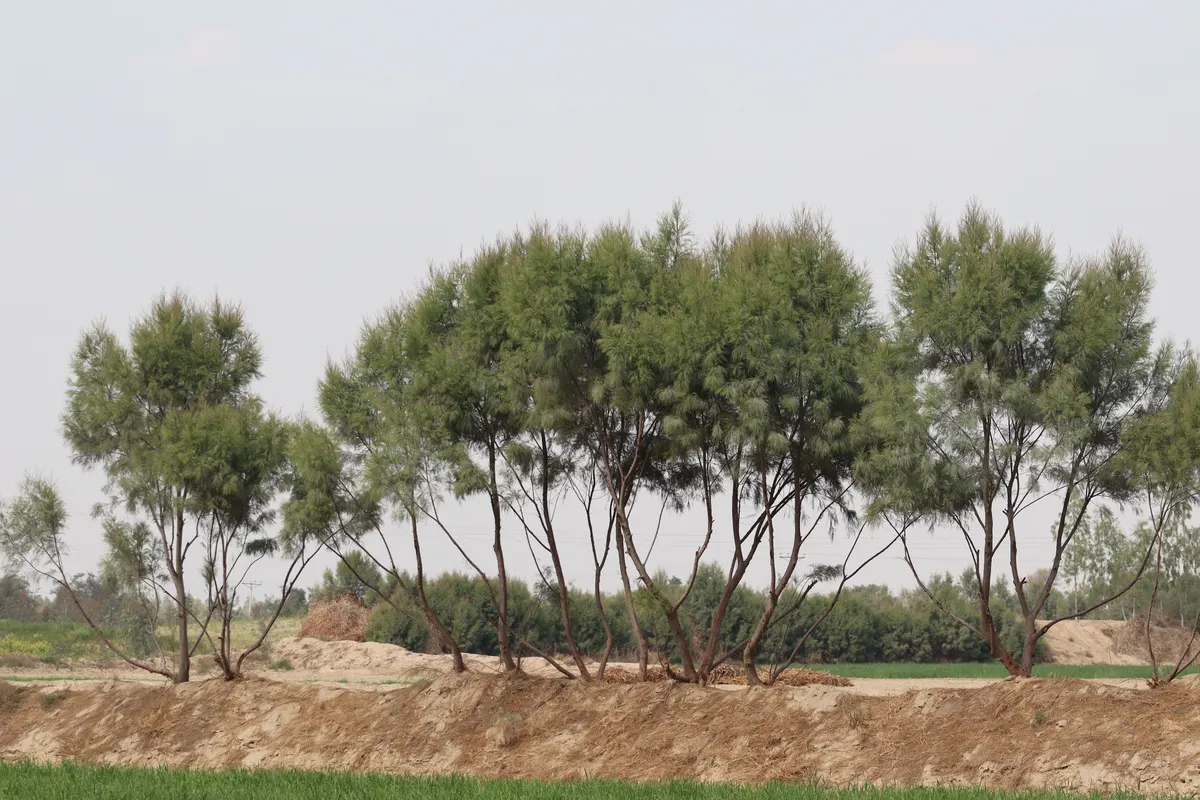
Saltcedar is a shrub or small tree, usually 5 to 20 feet tall, with tiny scale-like leaves on slender, drooping branches and clusters of small pink to white flowers (Texas Invasives). It looks a bit like a cedar or juniper from a distance, but it isn't related to either. In the field, the giveaways are the feathery blue-green foliage, the pink plumes in late spring and summer, and its habit of forming dense stands along draws, stock tanks, pond edges and other low spots that stay wet.
Each flower can make thousands of seeds, each about 1/25 of an inch across, and wind and water carry them a long way. Saltcedar was brought into the U.S. in 1823 and had escaped cultivation by the 1870s. It grows best in salty soils and tolerates soil sodium up to about 15,000 ppm (Texas Invasives).
Why it matters on a lease
Saltcedar's long taproot can reach a deep water table. The Forest Service field guide says roots can grow 30 feet deep or more, and that the plant uses that water to outcompete native vegetation. Its fallen leaves also raise the salt content of the surface soil, which makes it harder for other plants to come back underneath (USDA Forest Service field guide). On a lease, that means a thicket around a tank, a draw or a wet spot keeps spreading, blocks access and visibility, and leaves salty, bare ground behind if you just knock it down. The plant is also adapted to fire and resprouts after burning (Texas Invasives).
Which method fits which stand
| Method | Best for | Timing | Source |
|---|---|---|---|
| Leaf spray: ½% Arsenal + ½% glyphosate in water | Bushy, multi-stemmed plants and thickets you can spray to near-dripping | July through September, before leaves yellow; not when foliage is wet | Texas A&M AgriLife Brush Busters |
| Stem spray: 25% Remedy (triclopyr) in diesel | Low densities of tree-type plants with a few smooth trunks | Any time of year; best in the growing season | Texas A&M AgriLife Brush Busters |
| Cut stump spray | Plants you need to cut for access anyway | Treat the cut surface right after cutting, per the label | Texas A&M Natural Resources Institute |
| Grubbing or root plowing | Dense stands on ground that can be worked with equipment | Must sever the root crown 12 to 18 inches down; pile and dry the plants before burning or mulching | USDA Forest Service field guide |
Leaf spray mix
Brush Busters uses the same ½% plus ½% rate for every tank size. Add a surfactant at ¼% and a spray dye so you can see what you've covered (Texas A&M AgriLife Brush Busters; Brush Busters mixing guide):
| Spray volume | Arsenal (imazapyr) | Glyphosate |
|---|---|---|
| 3 gallons | 2 oz | 2 oz |
| 14 gallons | 9 oz | 9 oz |
| 25 gallons | 16 oz | 16 oz |
Wet the leaves almost to the point of dripping, and cover the whole plant. Brush Busters reports root kill of 76 to 100% when the leaf spray goes on correctly in the right season (Texas A&M AgriLife Brush Busters). The Brush Busters leaflet also notes that Arsenal is labeled for saltcedar only in the western half of Texas, so read the label for your county. If you're spraying near water, use a glyphosate product labeled for aquatic sites. Check the label for grazing and endangered species restrictions too. To turn those rates into totals for a whole location, use our spray acreage and mix calculator.
Stem spray for scattered trees
For plants with a few larger trunks, mix 25% Remedy with 75% diesel. That's 1 quart of Remedy and 3 quarts of diesel per gallon of mix (Texas A&M AgriLife Brush Busters). The mixing guide also allows vegetable oil as the carrier (Brush Busters mixing guide). Wet the lower part of every trunk all the way around, as the leaflet shows. Brush Busters says this method doesn't work well on multi-stemmed plants, so switch to the leaf spray on dense, bushy growth. Expect to control at least 7 out of 10 plants with either method. Cost goes up with the size and density of the stand (Texas A&M AgriLife Brush Busters).
Equipment and big stands
Large, dense stands are often handled with equipment or aerial spraying instead of plant-by-plant work. Root plowing severs the root crown 12 to 18 inches deep. After that, the plants should be piled and dried, then burned or mulched, so that no root pieces are left in moist soil to sprout again (USDA Forest Service field guide). On the Pecos River, a Texas and New Mexico project began aerial herbicide work in 1999 and saw 85 to 90% initial mortality (USDA Forest Service research). That kind of project is a landowner or district decision. On a lease, most work is spot treatment around pads, roads, tanks and drainages.
Watch the bird season
Saltcedar thickets can be nesting habitat. The Forest Service guide for the Southwest says migratory birds nest in saltcedar from about April through August. In habitat used by the endangered southwestern willow flycatcher, it recommends no treatment from April 15 to August 30 and a buffer of a quarter mile around nests (USDA Forest Service field guide). That guidance was written for Forest Service land in Arizona and New Mexico. On private and lease ground, the federal law protecting endangered species still applies, so if a stand sits along a river or a big wetland, check before clearing it in spring or summer. The Forest Service guide also covers the leaf beetles (Diorhabda) released in the early 2000s to feed on saltcedar (USDA Forest Service field guide). If you see stands with brown, stripped foliage, beetles may already be working on them.
Who can spray it
If someone sprays saltcedar on property they don't own or lease, for hire, Texas requires them to hold a commercial pesticide applicator license from the Texas Department of Agriculture. Oilfield sites fall under the industrial weed category. Ask your contractor for their license number before work starts. For year-round upkeep of the rest of the pad, see oilfield lease weed control. For brush along pipelines, see right-of-way vegetation control.
A practical salt cedar plan
- Winter or spring: map the stands, flag tree-type plants for stem spray, and check whether the stand could be bird nesting habitat.
- Growing season: stem spray scattered trees, and cut and treat any stumps where you need access.
- July through September: leaf spray thickets before the leaves yellow.
- The next year: come back to the same spots and treat resprouts and seedlings while they're small.
Mesquite moving in on the same pasture or right-of-way? See how to kill mesquite trees for the leaf spray and stem spray mixes.
Saltcedar crowding a draw, tank or lease road? We are TDA-licensed and treat brush and weeds on oilfield locations across the Permian Basin.
Get a brush control quoteFAQ
Does cutting salt cedar kill it?
No. Saltcedar resprouts from a root crown 12 to 18 inches below the surface, so cutting, mowing, burning or grazing only sets it back. Treat the cut stump with herbicide right away, or kill the plant with a leaf or stem spray.
What is the best herbicide for salt cedar?
Texas A&M Brush Busters recommends a leaf spray of ½% imazapyr (Arsenal) plus ½% glyphosate in water, or a stem spray of 25% triclopyr (Remedy) in diesel for scattered, tree-type plants. Always follow the product label for your site.
When is the best time to spray salt cedar?
Leaf spray works best from July through September, before the leaves turn yellow. The stem spray can go on any time of year but works best during the growing season.
Can you burn salt cedar to get rid of it?
Not by itself. Saltcedar is adapted to fire and resprouts after burning. Burning works for piles of plants that were already grubbed out and dried.
Is salt cedar a real cedar?
No. Saltcedar is a tamarisk (Tamarix), not a cedar or juniper. It gets the name from its scale-like leaves and its tolerance of salty soil.
Do I need a license to spray salt cedar for someone else in Texas?
Yes. Spraying for hire in Texas requires a commercial pesticide applicator license from the Texas Department of Agriculture.