
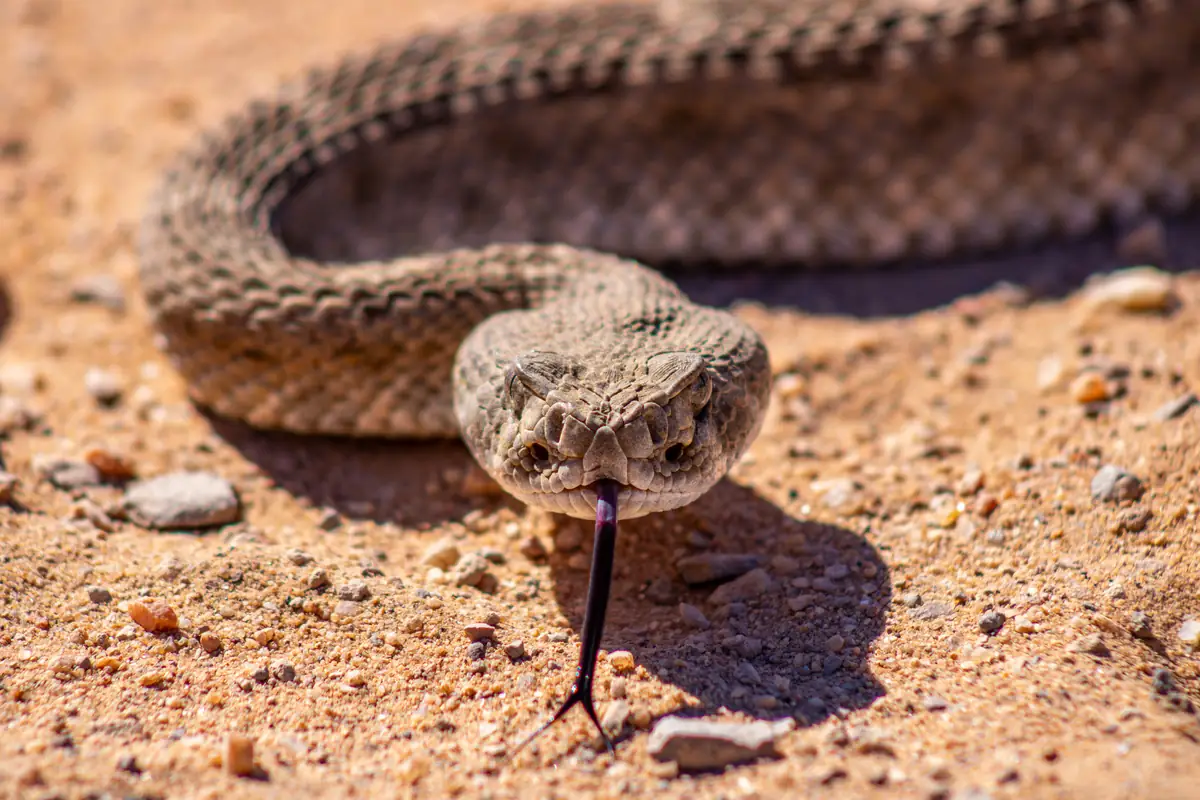
Photo: highsinger, CC BY 4.0, via Wikimedia Commons

If a rattlesnake bites someone on your crew: get them out of striking range, call 911, keep them calm and still, take off rings and watches before the swelling starts, wash and cover the bite, and mark the edge of the swelling with the time. Then get them to a hospital, and do not let them drive themselves. Do not cut the bite, suck it, ice it, or put on a tourniquet. Antivenom is the treatment, and only a hospital can give it (CDC/NIOSH, Texas DSHS).
This guide explains each step and how to set a remote lease up before it happens. It is general first aid information, not medical advice.
Step by step
- Move away from the snake. Rattlesnakes can strike a third or more of their body length from any position, coiled or stretched out, and they do not always rattle first (CDC). Get the injured person and everyone else clear before doing anything else.
- Call 911 and tell your supervisor. Treat every bite as an emergency. Have someone else make the call if you can, and give the lease name and GPS location, not just "the battery off the county road."
- Keep the person calm and as still as possible. Have them sit or lie down. Texas DSHS says to limit movement of the bitten limb and avoid exertion, bringing transport to the person where possible.
- Remove rings, watches and tight clothing near the bite before swelling begins.
- Wash the bite with soap and water if you have them, and cover it with a clean, dry dressing.
- Mark the swelling. Draw a line at the leading edge of the swelling or tenderness and write the time next to it. A NIOSH herpetologist suggests re-marking about every 15 minutes while you wait, so the emergency room can see how fast it is spreading (NIOSH Science Blog).
- Get them to a hospital. CDC says not to drive yourself, because a bite can make you dizzy or pass out. If EMS cannot reach you quickly, start transport and meet them on the way. DSHS suggests calling ahead so the hospital can have antivenom ready.
- Photograph the snake only if it is safe. A photo from a safe distance can help with treatment. Do not try to catch or kill it.
What not to do
These are all on the CDC and Texas DSHS do-not lists:
- No tourniquet or other constricting band.
- No cutting the wound and no sucking out venom, by mouth or with a suction kit.
- No ice or cold packs, and no soaking the bite in water.
- No electric shock or folk remedies.
- No alcohol, and no pain relievers such as aspirin, ibuprofen or naproxen unless a doctor says so.
- No waiting to see if symptoms show up.
- No handling the snake, even a dead one or a cut-off head. DSHS warns a dead snake can still bite by reflex for a short time.
Where to hold the arm or leg
Older first aid advice varies on this. CDC's current page says to keep the bite in a neutral position of comfort. Texas DSHS says to hold it level with the heart: raising it higher could speed the venom along, and holding it lower could increase swelling. In practice, both point the same way: keep the limb still and roughly at heart level, and do not hang it down or prop it up high.
Signs of a bite
Around the bite: puncture marks, bleeding, redness, swelling, bruising or blistering, and severe pain. Beyond it: nausea or vomiting, trouble seeing or breathing, a fast heart rate or weak pulse, a metallic, mint or rubber taste, heavy sweating or drooling, numbness or tingling around the face or limbs, and muscle twitching (CDC). NIOSH adds that missing fang marks do not prove a bite was harmless.
About half of venomous snakebites are "dry," with no venom injected, according to Texas DSHS. Nobody on location can tell which kind it was, so every bite goes to the hospital.
The numbers
- An estimated 7,000 to 8,000 people are bitten by venomous snakes in the U.S. each year, and about 5 die (CDC).
- Texas averages 1 to 2 deaths a year from venomous snakebite (Texas DSHS).
- Among people bitten by rattlesnakes, an estimated 10% to 44% have lasting effects, such as losing part of a finger or use of the bitten area (CDC). CDC says prompt medical treatment lowers the risk of death and serious injury.
Rattlesnakes in the Permian Basin
Texas Parks and Wildlife calls the western diamondback the most common and widespread venomous snake in Texas, found in all but the easternmost part of the state. Out here you may also see the prairie rattlesnake on the grassy plains of the western third of the state, and the desert massasauga in the Trans-Pecos and western Panhandle. Blacktails turn up in brush and on rocky ledges across much of West Texas, while rock and Mojave rattlesnakes stay farther west (TPWD). The first aid is the same for all of them.
Preventing bites on a lease
Most of the NIOSH and CDC prevention advice fits lease work directly:
- Do not put hands or feet where you cannot see. That means pipe racks, pallets, stacked material, valve boxes, cellars, tall grass at fence lines and brush around firewalls.
- Wear leather gloves and use a tool to move debris, lifting the far side toward you so the object is between you and anything under it.
- Wear boots and long pants. NIOSH suggests employers consider snake-proof boots or puncture-resistant gaiters.
- Be alert in warm weather and at dawn, dusk and night, when snakes are most active.
- Leave snakes alone and tell the crew where you saw one. NIOSH notes that most bites happen when people try to catch or kill them, and that juveniles carry venom just as potent as adults.
- Keep weeds and brush down around equipment, since overgrowth gives snakes cover. See our lease weed control guide.
Plan it before the bite
NIOSH tells employers to treat venomous snakes as a workplace hazard and to build and practice a snakebite response plan. On a remote lease, that plan needs the same pieces as any first aid plan: written lease directions and GPS coordinates, a known point where someone meets the ambulance, the nearest hospital that can give antivenom, and a trained first aider on every crew. OSHA's first aid rule and what "near proximity" means for a lease are covered in OSHA first aid rules for remote job sites.
Training your crew
Simba Services teaches American Red Cross First Aid/CPR/AED in Greenwood or at your yard or location. It is a 2-hour, hands-on class with up to 10 people, and the card is good for 2 years. NIOSH also says to practice the snakebite plan, so walk through the steps above at your next safety meeting, including who calls and who drives.
Scorpions hide in the same rocks, boards and debris. See scorpion sting first aid for ice, warning signs and when to call 911.
Want every crew to have a trained first aider? Book a First Aid/CPR/AED class in Greenwood or at your site.
Book first aid trainingFAQ
What is the first thing to do after a rattlesnake bite?
Get away from the snake, then call 911. Keep the person calm and still, remove rings and watches, wash and cover the bite, and get them to a hospital. Do not let them drive themselves.
Should you use a tourniquet or a suction kit on a snake bite?
No. CDC and Texas DSHS both say not to use a tourniquet, cut the wound, or try to suck out venom. Ice, electric shock, alcohol and pain relievers are also on the do-not list.
Should a snake bite be kept above or below the heart?
Neither. Keep the limb still and roughly level with the heart. Texas DSHS says raising it can speed the venom and lowering it can increase swelling. CDC says a neutral position of comfort.
Is every rattlesnake bite venomous?
No. Texas DSHS says about half of venomous snake bites are dry, with no venom injected. You cannot tell in the field, so every bite needs a hospital.
Are baby rattlesnake bites less dangerous?
Do not assume so. NIOSH says juvenile venomous snakes are born with venom just as potent as adults, so treat a bite from a small snake the same way.
Can a dead rattlesnake still bite?
Yes. Texas DSHS warns a dead snake's head can bite by reflex for a short time, and CDC says never to handle one, even a cut-off head.