
Photo: Tanja-Denise Schantz, CC0, via Wikimedia Commons

On many Permian leases, the nearest ambulance is a long drive away. OSHA's first aid rule is short, and most of what matters is in how OSHA interprets two phrases: "near proximity" and "adequately trained." This guide covers the rule, what OSHA says those phrases mean, and what a crew working far from town should have in place before the first day on location.
The rule
29 CFR 1910.151(b) reads: "In the absence of an infirmary, clinic, or hospital in near proximity to the workplace which is used for the treatment of all injured employees, a person or persons shall be adequately trained to render first aid. Adequate first aid supplies shall be readily available." (OSHA)
Paragraph (c) adds that where anyone could be exposed to corrosive materials, the employer must provide facilities for quickly drenching or flushing the eyes and body in the work area. The construction standard, 29 CFR 1926.50, has matching requirements for construction work.
What "near proximity" means
The standard does not give a number of minutes. OSHA has long interpreted it as emergency care within 3 to 4 minutes in workplaces where serious accidents such as falls, suffocation, electrocution or amputation are possible. Where those injuries are unlikely, such as offices, OSHA says up to 15 minutes may be reasonable (OSHA, 2007; OSHA, 1993).
The reason is medical. For stopped breathing, cardiac arrest or uncontrolled bleeding, OSHA says first aid has to start within the first few minutes to prevent death or permanent harm. Few lease sites have EMS that close, so in practice someone on the crew needs first aid training.
If you plan to rely on outside EMS instead of a trained employee, OSHA says you must take steps before any accident, such as making arrangements with the provider, to be sure help will arrive promptly.
What "adequately trained" means
The general industry standard does not name a course. The construction standard, 1926.50(c), asks for a person with a valid certificate from the U.S. Bureau of Mines, the American Red Cross, or equivalent training that can be verified by documentary evidence (OSHA). Note the word "valid": an expired card does not meet it. A course from a national organization gives you a dated certificate you can show an inspector or an operator. OSHA also recommends, though it does not require, that every workplace have one or more employees trained in first aid, including CPR.
Where outside EMS is not an option
Some standards make first aid training mandatory no matter how close EMS is. OSHA cites logging (1910.266(i)(7)) and electric power work (1910.269(b)) as examples (OSHA). Crews that do electrical work on a lease or at a substation may fall under the second one.
Who should be trained
The rule says "a person or persons." One trained person is not enough if that person is off shift, on another location, or the one who gets hurt. Aim for trained people on every crew and every shift. Spread crews, such as a roustabout gang working several pads, need someone trained at each spot.
What to have on location
- First aid supplies. Required by 1910.151(b). OSHA's non-mandatory Appendix A points to ANSI Z308.1 for the minimum contents of a generic kit, and says larger or unusual operations should add to it. Check kits on a schedule and restock after use.
- Eyewash or drench facilities where anyone could be exposed to corrosive materials, such as acids, caustics or some treating chemicals. Required by 1910.151(c).
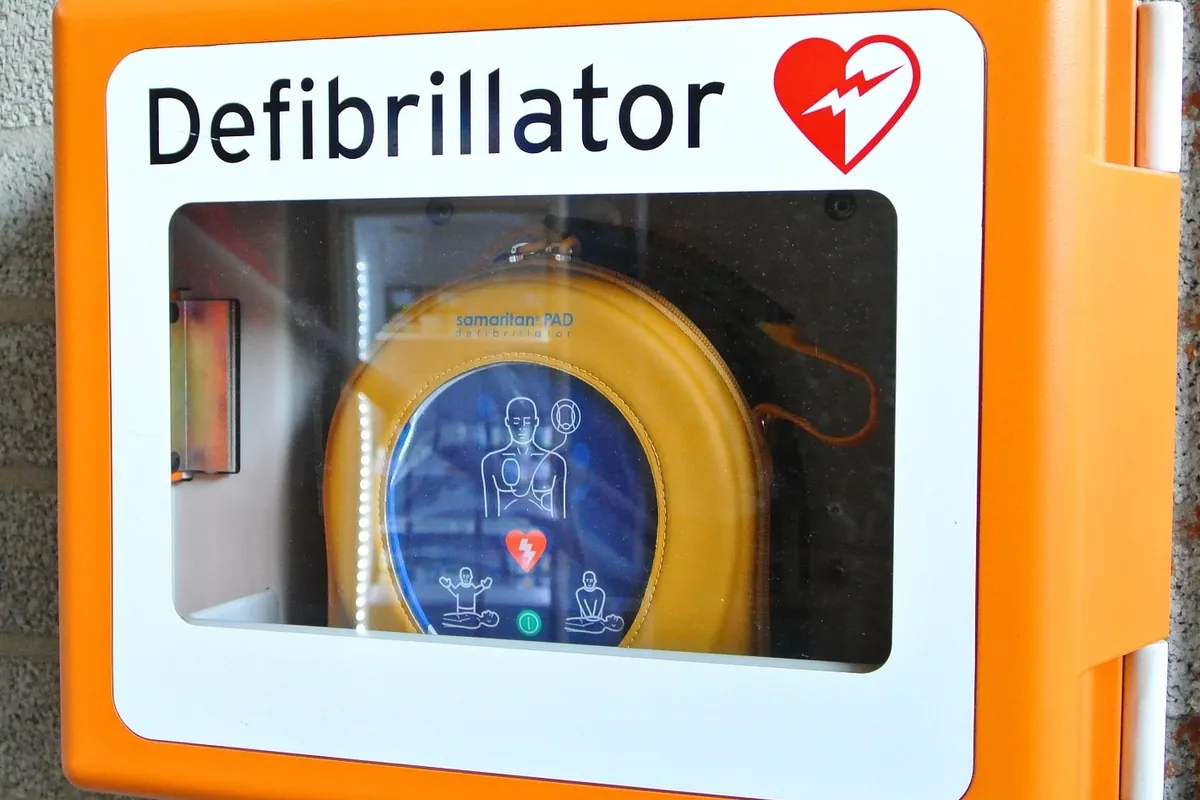
- An AED, if you can. OSHA standards do not specifically require AEDs, but OSHA encourages them. Survival from cardiac arrest drops 7 to 10 percent for each minute without CPR or defibrillation, and after 10 minutes resuscitation rarely succeeds (OSHA AED page).
- Location details. Lease name, GPS coordinates and turn-by-turn directions written down where anyone can find them. Lease roads are hard to describe in a panic.
- A way to call. Know where cell coverage drops out and what the backup is.
- A meeting point. Decide who will meet the ambulance at the highway or lease gate.
The injuries to plan for on a lease
OSHA's examples of serious accidents include falls, suffocation, electrocution and amputation. On a lease, add pinch points around rigs and pumpjacks, burns, heat illness in a West Texas summer, and H2S exposure. H2S is a special case: OSHA warns against attempting a rescue where H2S may be present without proper respiratory protection and training. See what level of H2S is dangerous.
Bloodborne pathogens
An employee who is trained in first aid and assigned to give it as part of the job is covered by the bloodborne pathogens standard, 1910.1030, and the employer must provide that training too (OSHA).
Applying it to a remote site
- Estimate EMS response time honestly, from the call to care reaching the injured person.
- If it is more than 3 to 4 minutes and serious injuries are possible, have trained people on every shift.
- Stock first aid supplies, plus eyewash where there are corrosives.
- Write down how EMS finds you.
- Track card expiration dates so nobody's certificate lapses mid-job.
Put the plan on one page and keep it in every truck: who is trained, where the kit and AED are, the location details for EMS, who calls, and who meets the ambulance. Go over it at the start of a new job.
We teach American Red Cross First Aid/CPR/AED at your lease or yard: 2 hours, up to 10 people.
Train my crew on siteFAQ
What does OSHA 1910.151(b) require?
If there is no infirmary, clinic or hospital in near proximity, someone must be adequately trained to give first aid and supplies must be readily available.
How close is near proximity?
OSHA interprets it as 3 to 4 minutes where serious injuries are possible, and up to 15 minutes in lower-risk workplaces such as offices.
Does OSHA require a specific first aid card?
The general industry standard does not name one. The construction standard asks for a valid certificate from the American Red Cross, the U.S. Bureau of Mines, or verifiable equivalent training.
Is an AED required on a lease?
OSHA standards do not specifically require AEDs, but OSHA encourages them.
Do first aid responders need bloodborne pathogens training?
If you assign an employee first aid duties as part of their job, the bloodborne pathogens standard, 1910.1030, applies to them.