
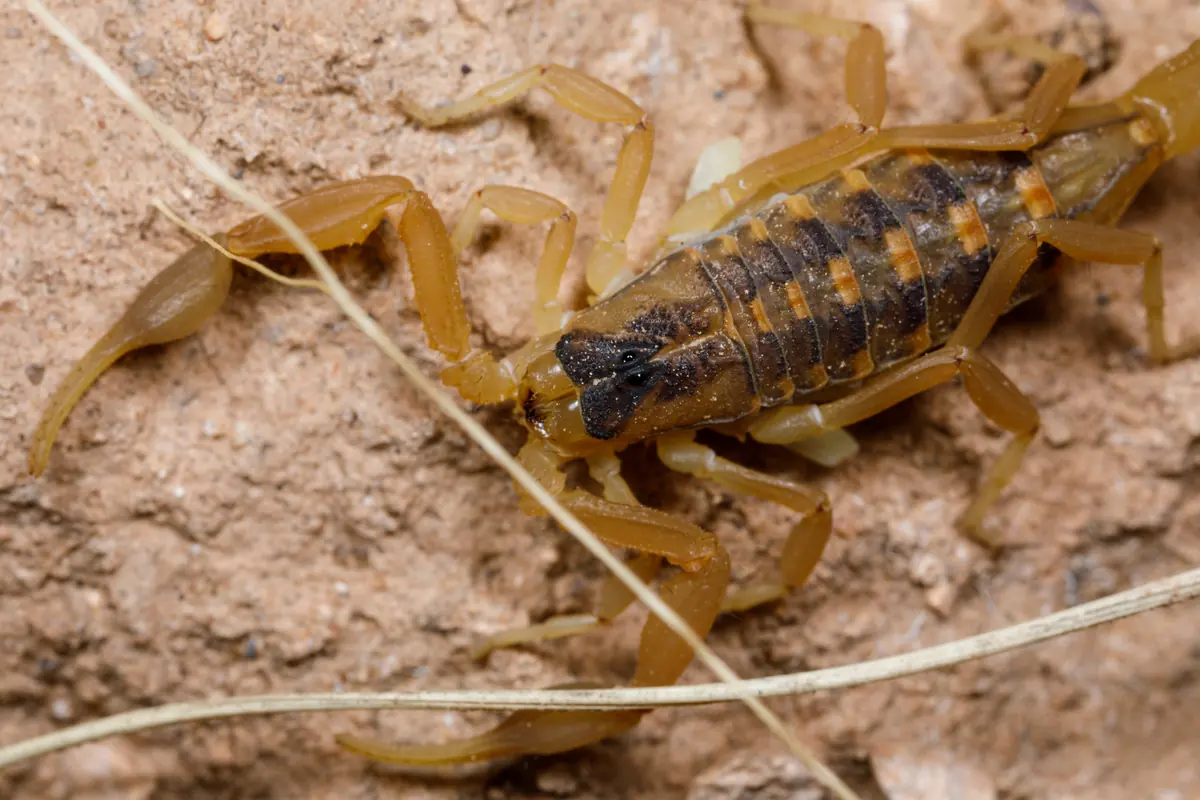
Photo: Meghan Cassidy via Wikimedia Commons, CC BY-SA 4.0, cropped

If a scorpion stings a worker, wash the sting with soap and water, put ice or a cool compress on it, and keep the person calm and still. Do not soak the limb in ice water, and do not give sedatives. Contact a qualified health care provider or poison control center for advice, and catch the scorpion for identification only if that is safe (CDC/NIOSH). Call 911 right away for trouble breathing, twitching or jerking muscles, drooling, slurred speech or any sign of a severe allergic reaction (Mayo Clinic). Most Texas stings hurt but stay local. Still, AgriLife says anyone stung should be watched closely for a bad reaction (Texas A&M AgriLife).
Which scorpions sting crews in Texas
Texas has 18 scorpion species. Only one, the striped bark scorpion, lives across the whole state. West Texas has more variety: Texas A&M AgriLife counts five species near Fort Stockton, eight in the Fort Davis area and 14 in Big Bend National Park. Adult striped bark scorpions are about 2½ inches long and yellowish tan, with two broad dark stripes down the back (Texas A&M AgriLife).
AgriLife says stings from Texas scorpions cause only moderate reactions in most people because the venom has little effect on the nervous system. How bad a sting gets depends on the scorpion and on the person, and allergic reactions are possible (Texas A&M AgriLife). Mayo Clinic notes that the U.S. bark scorpion with venom strong enough for serious symptoms lives mainly in Arizona, New Mexico and parts of California. Young children and older adults face the most risk (Mayo Clinic). Scorpions also ride along in clothing, luggage and shipping containers (Mayo Clinic), so don't assume every sting on a Texas job came from a Texas species.
Scorpion sting first aid, step by step
- Move away and stop the work. Back off so no one gets stung twice, and have a coworker stay with the person.
- Wash the site with mild soap and water (Mayo Clinic).
- Cool it. Apply ice or a cool compress. Do not submerge the hand or foot in ice water (CDC/NIOSH). For stings in general, Mayo suggests 10 to 20 minutes of cold at a time (Mayo Clinic).
- Rest the limb in a supportive position if the sting is on an arm or leg (Mayo Clinic).
- Keep the person calm. Do not give anything to make them sleepy or less anxious (Mayo Clinic). An over-the-counter pain reliever such as ibuprofen can help with pain if they can take it.
- Get advice. Contact a qualified health care provider or poison control center (CDC/NIOSH), and report the sting to your supervisor.
- Identify the scorpion if you can catch or photograph it safely (CDC/NIOSH). Use tongs or a container, never bare hands (Mayo Clinic).
If swallowing gets hard, Mayo advises small sips of water and medical care if that doesn't improve or gets worse over the next hour. Check that the worker's tetanus shot is current (Mayo Clinic).
Warning signs: when to call 911
Pain, numbness, tingling, slight swelling and warmth at the site are the usual local symptoms (Mayo Clinic). NIOSH adds a positive "tap test," where tapping the site causes extreme pain, and notes that symptoms usually fade within 48 hours (CDC/NIOSH). Call 911 for any whole-body symptoms:
- Trouble breathing
- Muscle twitching or jerking, or odd movements of the head, neck or eyes
- Drooling, sweating, slurred speech or a thick-tongue feeling
- Nausea and vomiting, a fast heart rate or restlessness
- Convulsions or a staggering walk (CDC/NIOSH)
A sting can also set off anaphylaxis, even in someone who only had a mild reaction before. Watch for hives, swelling of the lips, face or throat, dizziness or fainting, or a weak, rapid pulse. If the person carries an epinephrine autoinjector, ask whether they want help using it. Loosen tight clothing, and don't give anything to drink while you wait for EMS (Mayo Clinic). NIOSH says workers with a history of severe sting allergies should carry an EpiPen and wear medical ID (CDC/NIOSH).
Preventing stings on pads and lease roads
Scorpions hide during the day under rocks, boards, bark and debris and come out at night. The striped bark scorpion favors dead vegetation, fallen wood and buildings, and it climbs (Texas A&M AgriLife). On a job that means pipe racks, pallets, rig mats, sacks of absorbent, and gloves left in a truck bed. NIOSH recommends long sleeves and pants, leather gloves, and shaking out clothing and shoes before putting them on. Employers should train workers on the risk, on prevention and on what to do after a sting (CDC/NIOSH). Scorpions glow under a black light, so a UV flashlight helps on night work (Mayo Clinic).
Scorpions share ground with snakes and heat. Pair this with rattlesnake bite first aid and heat stroke vs. heat exhaustion in your tailgate talks, and check that your kit meets OSHA first aid rules for remote sites.
Want every crew to know what to do after a sting, a bite or a collapse? Book a hands-on First Aid/CPR/AED class in Greenwood or at your site.
Book first aid trainingFAQ
What is the first thing to do for a scorpion sting?
Move away from the scorpion, wash the site with mild soap and water, and apply ice or a cool compress without submerging the limb in ice water. Keep the person calm and contact a health care provider or poison control center for advice.
Are scorpion stings in Texas dangerous?
Most are not. Texas A&M AgriLife says Texas scorpion stings cause only moderate reactions in most people, but allergic reactions are possible and anyone stung should be watched closely. Young children and older adults face the most risk.
When should you call 911 for a scorpion sting?
Call 911 for trouble breathing, muscle twitching or jerking, unusual eye or head movements, drooling, slurred speech, convulsions, or signs of anaphylaxis such as hives or swelling of the lips, face or throat.
Should you put ice on a scorpion sting?
Yes. Ice or a cool compress eases pain, but CDC/NIOSH says not to submerge the affected area in ice water.
How long does a scorpion sting hurt?
NIOSH says symptoms usually subside within 48 hours. Get medical care if symptoms get worse or don't go away.
How do you prevent scorpion stings at work?
Wear long sleeves, pants and leather gloves, shake out clothing and boots before putting them on, and be careful lifting boards, rocks, pallets and debris where scorpions hide during the day.