
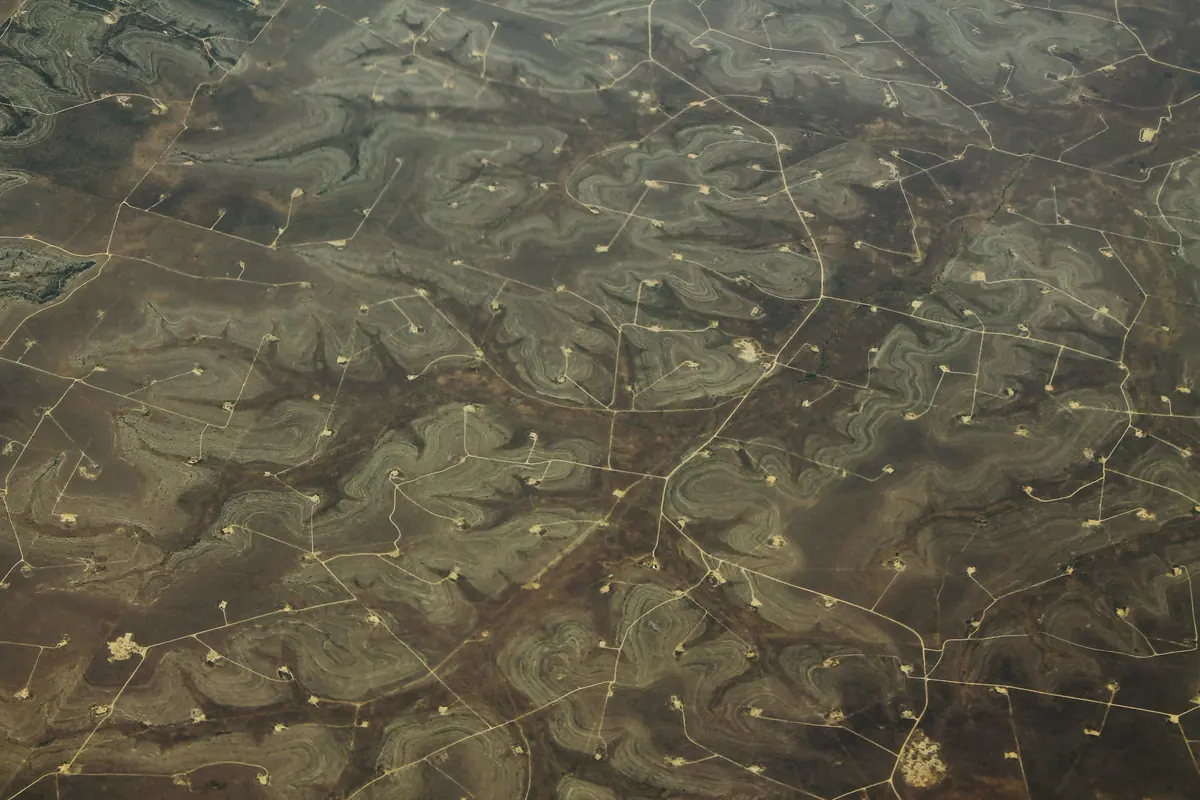
Photo: formulanone via Wikimedia Commons, CC BY-SA 2.0, cropped

In Texas, a diesel spill onto land must be reported to the state once it reaches 25 gallons in any 24-hour period. A spill directly into water must be reported once it is enough to make a sheen. Report it as soon as possible, and no later than 24 hours after you discover it (30 TAC 327.4, 30 TAC 327.3). The responsible person must also contain the spill right away, clean it up, and send TCEQ a written follow-up within 30 working days. If the diesel spilled during oil and gas work under Railroad Commission jurisdiction, TCEQ says to report it the way the RRC requires (TCEQ).
Is diesel a "petroleum product" under the rule?
Yes. TCEQ's spill rule defines a petroleum product as a fuel distilled from crude oil, and it names kerosene, distillate fuel oil, and #1 and #2 diesel (30 TAC 327.2). That matters because petroleum products have a much lower threshold than crude oil:
| What spilled | Where | Reportable quantity |
|---|---|---|
| Diesel, gasoline, used oil (petroleum product) | Onto land | 25 gallons |
| Petroleum product from a PST-exempt facility | Onto land | 210 gallons (5 barrels) |
| Petroleum product or used oil | Directly into water | Enough to create a sheen |
| Crude oil | Onto land | 210 gallons (5 barrels) |
| Oil and gas E&P releases under RRC jurisdiction | Any | As the RRC requires |
Thresholds come from TCEQ's reportable quantities table and 30 TAC 327.4. PST-exempt facilities are a short list, including electric utility equipment, refineries, petrochemical plants, bulk loading facilities and exempt pipelines. Most yard and job-site fuel tanks aren't on that list, so plan on 25 gallons.
Watch the word "water." The rule defines water in the state broadly. It includes groundwater, ponds, creeks, impounding reservoirs, and "the beds and banks of all watercourses" (30 TAC 327.2). Diesel that runs into a draw or a stock tank can fall under the sheen threshold, not the 25-gallon one.
TCEQ or Railroad Commission?
TCEQ's table sends releases "associated with the exploration, development and production of oil, gas, or geothermal resources" under RRC jurisdiction to the Railroad Commission's rules (TCEQ). RRC Statewide Rule 20 requires operators to give immediate notice of a fire, leak, spill or break to the RRC district office (16 TAC 3.20). Whether diesel spilled on a lease falls under the RRC or TCEQ depends on the work it was tied to. Ask the operator's company man right away, and keep notes on who you told and when. A spill at a contractor's yard or along a county road, away from oil and gas operations, falls under TCEQ's rule. For crude oil on a lease, see our guide to RRC Rule 91 crude spill cleanup.
First steps after a diesel spill
TCEQ's first priority is people: avoid direct contact with the fuel, stay upwind of vapors, keep bystanders back, and find and safely remove ignition sources (TCEQ). Then the rule requires the responsible person to immediately abate and contain the spill. Response actions can include getting response personnel on site, stopping the leak, limiting harm to people and the environment, removing the spilled fuel and managing the waste (30 TAC 327.5). On a pad that usually means closing the valve or plugging the tank, building a dirt berm or setting absorbent boom ahead of the flow, and keeping fuel out of draws and drains.
The state spill-reporting hotline is staffed 24 hours a day, and TCEQ regional offices take calls during business hours. Telling the National Response Center or your Local Emergency Planning Committee does not count as notice to the state (TCEQ). Before you call, have ready your name and contact information, the date, time and location, what spilled, an estimate of how much, how long it ran, the source, and any water or sensitive area affected or threatened (30 TAC 327.3).
Cleanup standard and waste
TCEQ's cleanup goal is to return the site to pre-spill or background conditions. If the cleanup will take no more than 180 days, the responsible party can choose to clean up under the Texas Risk Reduction Program instead. That route requires an Affected Property Assessment Report approved by the TCEQ regional office (TCEQ).
Diesel-soaked soil and pads are spill waste. TCEQ notes that residue from spills not tied to an industrial process may not be industrial solid waste. Even so, disposal facilities can require you to classify, document and haul it like industrial waste. Options other than landfill disposal include treatment at a facility registered with TCEQ's Petroleum Storage Tank program to take contaminated media, on-site treatment, and reuse or recycling. Those options need approval from the TCEQ regional on-scene coordinator (TCEQ).
The 30-day follow-up report
Within 30 working days of discovering a reportable spill, send the TCEQ regional office a written report. It should either state that the response is complete and describe it, or request an extension with a work schedule. Extensions can run up to six months from the spill (TCEQ, 30 TAC 327.5). TCEQ asks for a response timeline, the containment used, amounts of fuel recovered and lost, and the amount of soil removed. It also wants a scaled map of how far and how deep you excavated, sampling locations and lab results, waste classifications and disposal manifests (TCEQ). Take photos and measurements while you dig, because they're hard to reconstruct later.
The responsible person can be the facility owner or operator, or anyone who "causes, suffers, allows, or permits" the spill. If that person won't respond, TCEQ can take over the cleanup with state funds and pursue penalties (TCEQ). To keep fuel from reaching the ground in the first place, see secondary containment and SPCC rules.
Diesel on the ground at a yard, pad or lease road? Send the location and roughly how much spilled, and we will get a cleanup crew moving.
Request cleanupFAQ
How much diesel spill is reportable in Texas?
25 gallons onto land in a 24-hour period, or any amount that creates a sheen when spilled directly into water. Spills to land from PST-exempt facilities have a 210-gallon (5-barrel) threshold. Oil and gas E&P releases under Railroad Commission jurisdiction are reported as the RRC requires.
How soon do you have to report a diesel spill in Texas?
As soon as possible, and no later than 24 hours after the spill is discovered, under 30 TAC 327.3.
Is diesel considered crude oil or a petroleum product?
A petroleum product. TCEQ's rule defines petroleum product to include #1 and #2 diesel, so the lower 25-gallon land threshold applies instead of the 210-gallon crude oil threshold.
Does calling the National Response Center count as reporting to Texas?
No. TCEQ says notifying the National Response Center or the Local Emergency Planning Committee does not constitute notice to the state.
How clean does a diesel spill site have to be?
TCEQ's objective is pre-spill or background conditions. If cleanup will take 180 days or less, the responsible party may elect to use Texas Risk Reduction Program standards by submitting an Affected Property Assessment Report for regional approval.
What goes in the TCEQ 30-day spill report?
A statement that the response is complete with a description, or an extension request with a work schedule, plus details such as the response timeline, amounts recovered and lost, soil removed with a scaled excavation map, sampling results, waste classification and manifests.