
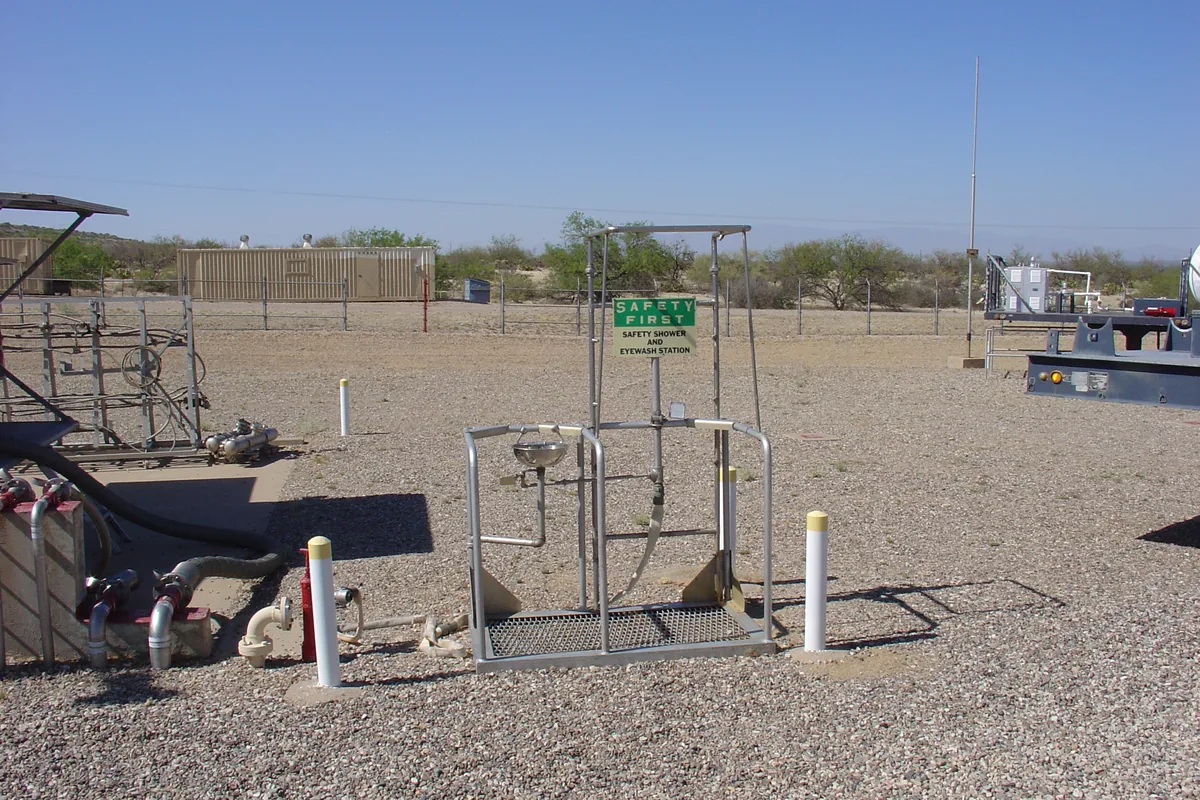
Photo: Jeff Keyzer via Wikimedia Commons, CC BY 2.0, cropped

If a chemical splashes in the eye, start flushing immediately with clean water and keep going. Mayo Clinic advises at least 20 minutes of lukewarm tap water with the lids held open. ANSI/ISEA Z358.1, the consensus standard OSHA points to for eyewash performance, requires equipment that can deliver flushing fluid for at least 15 minutes. Get emergency eye care after you irrigate, and take the chemical name or container with you (Mayo Clinic; OSHA eyewash InfoSheet). This guide is about eye irrigation, not skin burns. For heat and chemical burns on skin, see burn first aid for thermal and chemical burns.
First minutes: irrigate, then get help
Mayo Clinic's chemical eye splash steps are simple and time-critical (Mayo Clinic):
- Wash your hands with soap and water so you do not push more chemical into the eye.
- Remove contact lenses if you can do it quickly.
- Flush with clean, lukewarm tap water for at least 20 minutes. Hold the lids open. Use a worksite eyewash if one is nearby, a gentle faucet stream with the head turned to the side, or a shower stream aimed at the forehead above the affected eye (or the bridge of the nose if both eyes are hit).
- Seek emergency care from an eye specialist or emergency services. Bring the chemical container or its name. Sunglasses can help with light sensitivity on the way.
NIOSH first-aid codes for chemicals that say "Eye: Irrigate immediately" tell the same story: wash with large amounts of water, occasionally lifting the lower and upper lids, and get medical attention right away (NIOSH / CDC). Do not wait for pain to "settle" before you start the flush.
How long to flush: 15 minutes of equipment, 20 minutes of care
Two numbers show up in most training, and they answer different questions:
- Equipment capability (ANSI/ISEA Z358.1): an eyewash must be able to deliver tepid flushing fluid for a continuous 15 minutes after a single activation, at not less than about 0.4 gallons per minute (1.5 liters per minute), and it should run hands-free so the injured person can hold the lids open (OSHA eyewash InfoSheet; ISEA eyewash guide).
- First-aid duration (clinical guidance): Mayo Clinic recommends flushing for at least 20 minutes (Mayo Clinic). Many safety data sheets also say 15 minutes or longer. If the SDS or your site emergency plan names a longer time for that chemical, follow it.
Strong acids and alkalis are the worst offenders. Mayo Clinic notes that alkali burns (lye, concrete, mortar, oven and drain cleaners, dishwasher detergent, some fertilizers) tend to be more serious than acid burns because they keep penetrating tissue (Mayo Clinic). Hydrofluoric acid and a few other chemicals need special protocols beyond plain water; check the SDS before the job, not after the splash.
What OSHA requires on the site
OSHA's medical services and first aid rule, 29 CFR 1910.151(c), says that where the eyes or body of any person may be exposed to injurious corrosive materials, the employer must provide suitable facilities for quick drenching or flushing of the eyes and body within the work area for immediate emergency use (OSHA 1910.151). Construction work has a matching requirement in 29 CFR 1926.50. OSHA does not write the full ANSI design rules into the regulation, but its eyewash InfoSheet uses ANSI/ISEA Z358.1 for performance details such as flow rate, duration and tepid water (OSHA eyewash InfoSheet).
On a remote lease that still stores corrosives, acids, caustics, cement additives or strong cleaners, that usually means a plumbed or self-contained eyewash that someone can reach without a scavenger hunt. Self-contained units need the manufacturer's maintenance schedule so the fluid stays clean; OSHA warns that poorly maintained stations can make an eye injury worse (OSHA eyewash InfoSheet). Broader remote-site first aid expectations are covered in OSHA first aid rules for remote job sites.
| Source | What it says about eye flushing |
|---|---|
| Mayo Clinic | Flush at least 20 minutes with lukewarm water; hold lids open; seek emergency eye care |
| ANSI/ISEA Z358.1 | Eyewash delivers ≥0.4 gpm tepid fluid for 15 minutes; hands-free after one motion |
| OSHA 1910.151(c) | Suitable quick-drench/flush facilities in the work area when corrosives are present |
| NIOSH pocket guide | "Irrigate immediately" means large amounts of water, lift lids, get medical attention |
What not to do
Mayo Clinic's avoid list is short and worth memorizing (Mayo Clinic):
- Do not rub the eye.
- Do not put anything in the eye except water or contact-lens saline rinse unless emergency personnel tell you to.
- Do not use eye drops on your own unless instructed.
Do not try to neutralize an acid with a base (or the reverse) in someone's eye. Do not stop the flush early because it "feels better." Keep irrigating while someone else arranges transport, and keep the chemical name ready for the ER.
Training the crew before the splash
Eye splash response is a skill, not a poster. Crews should know where the eyewash is, how to activate it with one motion, how to hold lids open, and how long to stay under the stream. That fits with the first aid and CPR skills covered in our safety training classes and with site drills under your operator's emergency plan. Practice finding the station with eyes closed or vision blurred; real exposures rarely leave you calm and clear-sighted.
Want your crew practiced on eyewash use, burns and other first minutes emergencies? We teach hands-on first aid and CPR for oilfield crews in Midland and across the Permian Basin.
Book first aid trainingFAQ
How long should you flush your eyes after a chemical splash?
Start flushing immediately and keep going. Mayo Clinic advises at least 20 minutes with clean lukewarm water. ANSI/ISEA Z358.1 requires eyewash equipment to deliver flushing fluid for at least 15 minutes. Follow a longer time if the chemical's safety data sheet says so.
Does OSHA require an eyewash station?
Yes, where eyes or body may be exposed to injurious corrosive materials. 29 CFR 1910.151(c) requires suitable facilities for quick drenching or flushing of the eyes and body within the work area for immediate emergency use.
What does ANSI Z358.1 require for an eyewash?
ANSI/ISEA Z358.1 expects an eyewash that activates within about one second, runs hands-free, and delivers tepid flushing fluid at not less than 0.4 gallons per minute (1.5 liters per minute) for 15 minutes. OSHA cites these performance details in its eyewash InfoSheet.
Should you remove contact lenses after a chemical splash?
Yes, if you can remove them quickly. Mayo Clinic lists removing contacts after washing your hands, then flushing the eye. Do not delay irrigation to hunt for lenses.
What should you not do after a chemical gets in the eye?
Do not rub the eye. Do not put anything in the eye except water or contact-lens saline rinse unless emergency personnel tell you to. Do not use eye drops on your own unless instructed.
Is a chemical eye splash different from a skin chemical burn?
Yes. This guide covers eye irrigation and eyewash use. Skin chemical burns are covered in our thermal and chemical burn first aid guide. Eyes need continuous irrigation with the lids held open, then emergency eye care.